

LSAT Preptest 23 LG Explanations
Full explanations for every question from the logic games section of LSAT Preptest 23.
Archived Logic Games explanations
Logic Games are no longer part of the LSAT. LSAC removed the Logic Games section beginning with the August 2024 LSAT. If you are studying for the current LSAT, you can skip this section.
These explanations remain available for students, tutors, and readers using old-format PrepTests. For current guidance, see Logic Games and the current LSAT.
Table of contents
Game 1: Music Recordings
Game 1 Setup
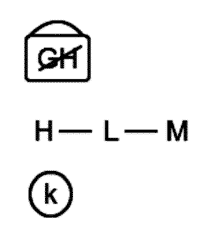
This is a standard linear game. Here’s the diagram. I’ve already added the first two rules: F is in 2 and J is not in 7.

The other rules are simple. G is not with H in either direction.

I’ve drawn this as G and H beside each other with a box and a line showing that it’s reversible and a line through it. The other two rules can be combined: H is before L and L is before M.

Lastly, K is a random variable. It’s always important to keep track of that: I’ve drawn K with a circle around it.

Game 1 Main Diagram
Main Diagram
The setup section explains how to build this diagram.

Question 1
A is wrong because F is in 1. It should be in 2.
B is CORRECT.
C is wrong because J can’t be last.
D is wrong because G and H can’t be beside each other.
E is wrong because L has to be after H.
Question 2
This gives us a new rule. You should draw it. M is before J and K separately.
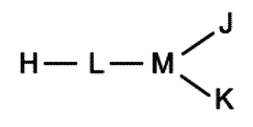
Now G is the only variable that can go many places. Everything else has a set order.
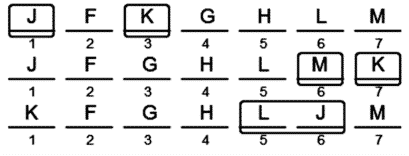
I’ve drawn a couple scenarios that prove A, B, C and E are wrong.
You’ll see that G doesn’t have to be beside L, so E is wrong. G doesn’t have to be first, so A is wrong.
K doesn’t have to be seventh, so B is wrong. L doesn’t have to be third, so C is wrong.
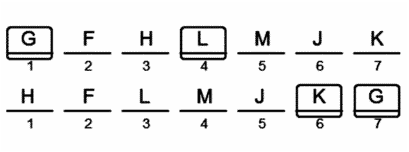
D is CORRECT. No matter what we do, H is either before or after F. Only G can go before H: that puts H in third. Otherwise H is in first.
Question 3
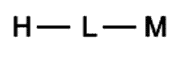
We know that L and M can’t go first because they’re after H. This lets us eliminate answers C, D, and E: they all have L. The only difference between A and B is whether or not H is possible. One of the diagrams from the last question shows that H can be first.

B is CORRECT.
Question 4
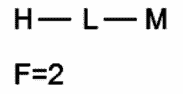
We know that H and L are before M. And F has to be in 2. So the earliest we could put M is in 4: H in 1, F in 2, L in 3 and M in 4.
Nothing else has to go in front of M. We can put J, K and G afterwards. C is CORRECT. Here is a diagram that shows it’s possible:

Question 5

The major new deduction is that G and H can’t go before F. There’s no space for both of them in spot 1. So G, H, L and M all go after F.
The only remaining variables are J and K. Therefore one of J and K has to go before F.

D is CORRECT. J comes after K so that means that they aren’t before F. The following diagrams proves that all of the other answer choices could be true.
Game 2: Applicants at A Non-Profit
Game 2 Setup
This is a very weird game. Pay careful attention to the explanations and how I build the diagram, as well as how to read the diagram. Make sure to reread if you don’t fully understand.
It looks like a type of conditional reasoning diagram, from an in-out game.
The complicating factor in this game is that people just aren’t in or out. There are three groups: Hired, Interviewed, Out.
The first two rules are simple. They tell us that if G is interviewed then J is interviewed. If J is interviewed then L is interviewed.

The next rule is also simple. F is always interviewed.

The fourth rule is worded strangely. Fu is not hired unless Kowalski is interviewed. It means that if you hire Fu then you need to interview Kowalski. Also, you know that if you hire Fu you have to interview Fu. This is always true but we can write it down regardless.
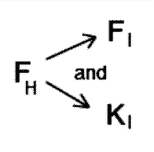
This is the start of a chain. It’s a bit different, but it’s very useful.
The next rule says that if you hire Kowalski then you have to interview Mayer. You also interview Kowalski if you hire Kowalski.
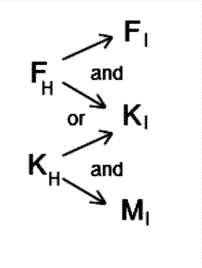
So Kowalski being interviewed is a necessary condition for Kowalski being hired and for Fu being hired.
The way to read this backwards (i.e. contrapositive) is that if you don’t interview Kowalski then you can’t hire Fu or Kowalski.
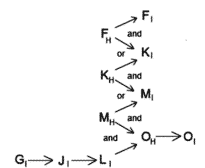
Lastly, if Mayer is hired and Lee is interviewed then you have to hire Ordoveza. We can add our diagram of G, J and L onto this main diagram.
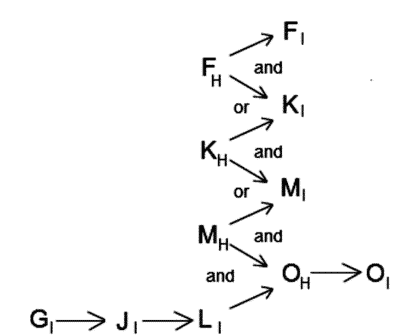
The diagram is pretty big. It contains all the variables. So, for example, if you interviewed G and you also interview J and L. If you hire M as well, then you must hire O. And since you hire O you must interview O.
Likewise, if you don’t interview O then you can’t hire O. So you must either not have hired M or interviewed L. That’s how we read this diagram.
Here’s the contrapositive:
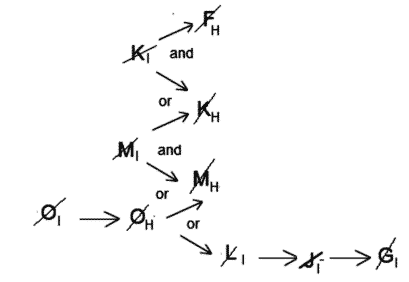
I didn’t find the contrapositive very useful. Instead I just figured out contrapositives section by section as needed.
Game 2 Main Diagram
Main Diagram
The setup section explains how to build this diagram.
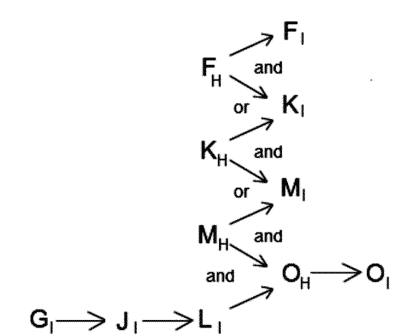
Normal Diagram
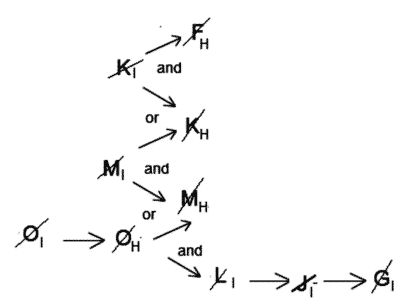
Contrapositive
Question 6
B is wrong. If you interview J then you have to interview L as well.
C is CORRECT.
D is wrong. If you interview G then you have to interview J as well.
E is wrong. If you interview G and J then you have to interview L as well.
Question 7
A is wrong because you always need to interview Fu.
B is wrong. If you interview J then you have to interview L.
C is wrong. If you inteview G then you interview J and L, which is two more.
D is wrong. If you interview G then you have to interview J and L. That makes three total. But you also have to interview Fu, which is four total.
E is CORRECT. We could have G, J and L interviewed, along with Fu.
Question 8
If we don’t interview Mayer, we don’t hire M or K.
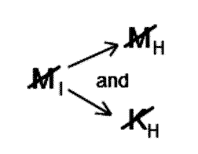
A is wrong. It’s too strong. We only know that K is not hired. K could still be interviewed.
B is doesn’t have to be true. Kowalski might be interviewed but there’s no reason they have to be.
C doesn’t have to be true. If Fu is hired, Kowalski only needs to be interviewed, not hired.
D doesn’t have to be true. Fu could be hired, but he doesn’t have to be.
E is CORRECT. Fu is always interviewed. And we know Kowalski is not hired because M is not interviewed.
Question 9
If Gunsel is interviewed then J and L are interviewed too. F is always interviewed.
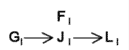
That makes four people. We need six, so two other people are interviewed. Three people are hired.
Three answers are wrong because O would have to be included too.
A is wrong. If Mayer is hired and Lee is interviewed then O has to be hired as well.
B is wrong. If Mayer is hired and Lee is interviewed then O is hired too.
C is wrong. If Kowalski is hired then Kowalski is interviewed and Mayer is interviewed. If O is hired then O is interviewed.
That’s three more people interviewed. We already had four. That’s seven total, we can only have six.
D is wrong because if Mayer is hired and L is interviewed then O is also hired.
E is CORRECT. There is no rule that tells us what would happen if G, J and L are hired. Nobody else has to be hired.
We can O to the list of interviewees (without hiring O). That creates our total of six interviews.
Question 10
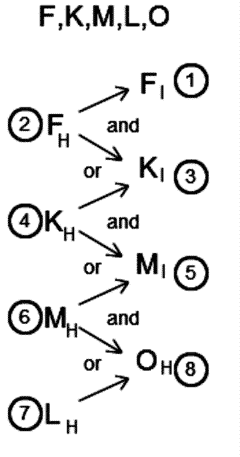
The key to this question is that Fu is always interviewed. Thanks to this new rule, Fu is also hired.
If Fu is hired then K is interviewed. If K is interviewed he must be hired.
If K is hired then M is interviewed. That means M must be hired.
If M is hired and L is hired (the question says L is hired) then O must be hired.
This means that F, K, M, L and O all have to be hired.
B is CORRECT because Jackson is to the left of L. Nothing forces Jackson to be interviewed or hired.
(The diagram below shows the order things happen in, as I described it above. Everyone who is interviewed is hired.)
Question 11
If O isn’t interviewed then O isn’t hired. And if O isn’t hired then either L isn’t interviewed or M isn’t hired. We know that four applicants are hired in this question.
If L isn’t interviewed then J isn’t interviewed and G isn’t interviewed. We already know O isn’t interviewed. That’s four people out of seven who are not interviewed. We can only have three not interviewed. (We need four people interviewed if we hire four people)
So we have to interview L, at least. Therefore it has to be Mayer that’s not hired. B is CORRECT.
Game 3: Anthropologists and Linguists
Game 3 Setup
This is a grouping game. The rules are straightforward, with one twist. There are six spots, but seven researchers. They go on two teams.
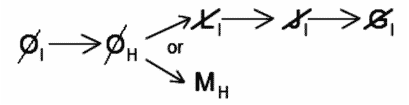
The researchers are split into anthropologists and linguists. Each team has at least one anthropologist and one linguist. There are only three anthropologists: F, J and M. At most two of them can go on a team.
It’s important to remember that each team must have one of F, J or M. Here is a good way to draw this setup:

If you are ever unsure of how to draw a setup, you can look at the first question of the game. In this case, they set it up the same way.
The first three rules tell us who can’t go together. F and S are apart. R and N are apart and M is not with R or S.
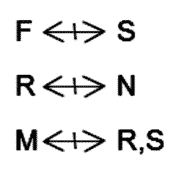
You could draw these right in the diagram….if you knew that everybody was in. (The pairs would be split between groups). But we can’t, because not everyone goes in.
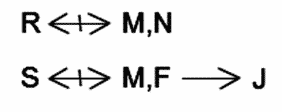
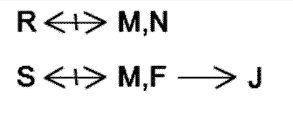
You can make additional deductions by rearranging things to show who R can’t go with and who S can’t go with.
If you have R then you don’t have M and N. If you have S then you don’t have M and F. M and F are two out of three anthropologists. So if you have S you must have the other anthropologist, J.
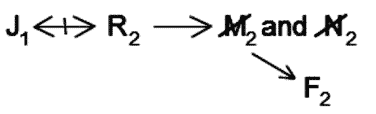
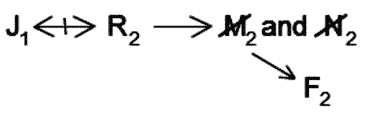
The last rule tells us what happens when J is in 1. R is in 2. M and N don’t go with R, so they aren’t in 2. Both J and M aren’t in 2, so we need to put the other anthropologist there: F.
 ,
, 
One other thing you should do before moving on is to write down all your variables. Identify the random, which is O. O can go with anyone.
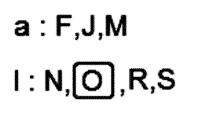
Game 3 Main Diagram
Main Diagram
The setup section explains how to build this diagram.
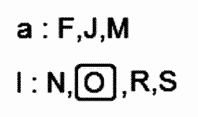
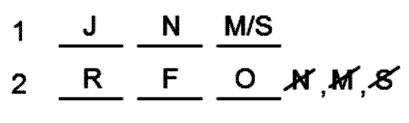
Question 12
A is wrong because N and R are on the same team.
B is wrong because F and S are on the same team.
C is CORRECT.
D is wrong because there is no anthropologist on team 2.
E is wrong because J is on team 1 but R is also on team 1 which violates the last rule.
Question 13
J is on team one, so we have to put R on team 2. (we saw this in the setup)
That means we can’t put M and N on team 2. We have to put F on team 2, because they’re the only other anthropologist.
S can’t go in team 2 because S can’t go with F. The only researcher left is O.
Team 1 will be J, N and one of M and S. We need N because M and S can’t go together.
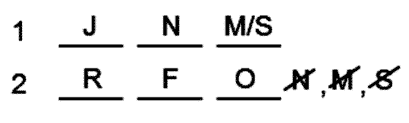
A is CORRECT. F and R have to be on team 2.
B can’t be true because M can’t go with R.
C can’t be true because R can’t go with N.
D can’t be true because then team 2 would be R, O and S. There would be no anthroplolgist.
E can’t be true. We need an anthorpologist. F has to go on team 2 and F can’t go with S.
Question 14
Neil is on team 1. That means that we can’t put R there.
At this point, some people will try and draw a bunch of scenarios. I find it useful to first look at the answer choices. They tell us who to try and draw. We always need an anthropologist. Four of the answer choices have J as the anthropologist and the fifth E is wrong because it has no anthropologist.
So the question only wants us to try scenarios where J is on team 1. When J is in team 1, this happens:
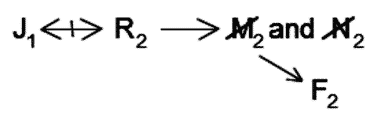
We get the same scenario we saw in the last question:
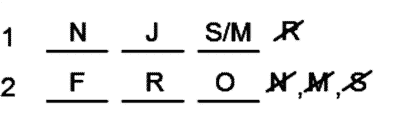
A is wrong. If you have J on team 1, then Franklin goes on team 2. (J causes R to go in 2, which means M can’t go in 2. Team 2 needs an anthropologist, and only F is left.)
B is wrong because Osborne has to be in team 2. They’re the only one left to go with both F and R.
C is wrong because if J is in 1 then Rice is in 2.
D is CORRECT.
E is wrong because none of N, O, S is an anthropologist.
Question 15
Franklin and Marquez are together. We have to put them on team 1. If we put them on team 2 that would mean J would be in team 1. And that would trigger the last rule, and the scenarios we saw in questions 13 and 14.
So F and M are on team 1, and J is on team 2. R and S can’t go on team 1, because M can’t go with them. That’s five total variables. Only N and O are left to fill the last spot on team 1.
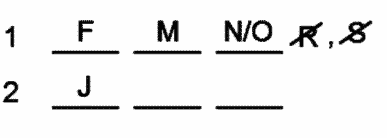
A is wrong because J has to go on team 2.
B is wrong because R would be with M if R went on team 1.
C is CORRECT. We could put S on team 2. The only people S can’t go with are M and F.
D is wrong. We can’t put both N and O on team 1. There’s no space.
E is wrong. If we put both O and N on team 2 then we wouldn’t have anyone to put in the final spot on team 1.
Question 16
Three of the answers involve Franklin. We know from our past scenarios that you can’t have Franklin and Marquez in team 2. (J would be in team 1 which forces R into team 2. R can’t go with Marquez. )
B is CORRECT.
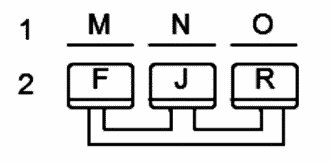
This scenario proves that A, C and E could be true. (The lines link the pairs FJ, JR and FR)
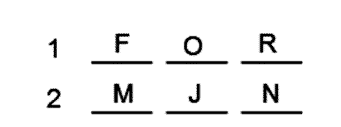
The next scenario proves that J and Marquez could go together in team 2.
Question 17
One of our diagrams from the last question proves that A can be true. A is CORRECT.
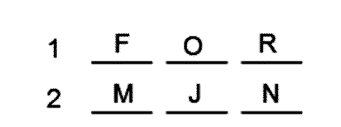
B can’t be true. If we put F on team 2 and we don’t have J on any team, that means that we have to have Marquez on team 1. (M is the only other anthropologist.) S can’t go with M or F so that means that we don’t have S or J in either team. That’s too few people.
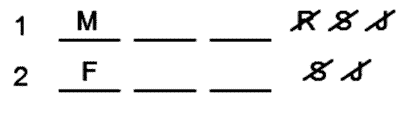
C can’t be true because if we put F and M on team 2 then J must go on 1 which forces R to go on 2.
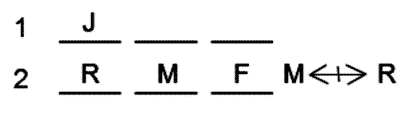
D can’t be true because if J is on team 1 then R goes on team 2. That causes F to go onto team 2, because team 2 needs an anthropologist. So Franklin has to be on a team.

E can’t be true. If J is on team 1 then R and F are on team 2 and R is not able to go with N.
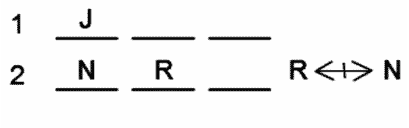
Question 18
If Marquez is on team 2 then we need to put J on team 2. We’ve seen this on many other questions. If J were on team 1 then R would go on team 2. R cannot go with Marquez.
If we left J out, we would have to put F on team 1 (so that each team has an anthropologist). S can’t go with F or M, so S would have no place to go. We can’t leave both J and S out.
So J has to be in, and in team 2.
B is CORRECT.
Game 4: Mayoral Candidates
Game 4 Setup
This is a type of pattern game. It’s a rare type. You must know the rules very well.
We have to use each candidate three times. The candidates are all interchangeable.
Everyone has to speak first or second at least once. There are six spots that are first or second and there are five people.
So someone could go twice in first or second but not three times. Suppose R went three times. There would only be three other spaces left in first or second, and four people to put there. It just doesn’t work.
The second rule is that if someone speaks fifth then they have to speak first at least once. No one can speak fifth three times, because then they are not speaking first. Someone could speak fifth two times and first once.
Lastly, someone can only speak 4th once, at most.
I’ll repeat: everyone is interchangeable. Clearly, if you put R in 5 (for example) then you have to put R in 1 somewhere else. But if you don’t trigger a rule, there are no other rules about these variables.
Don’t move onto the questions until you know the three rules practically by heart. There is no way of writing them down that is going to fix this for you. You have to learn them and when you do, the game isn’t that hard.
If you can remember a few strangers’ names at a party for a few minutes, you can remember three rules for the same amount of time.
Not realizing that the rules have to be internalized is the single biggest thing holding many people back at logic games.
(The other important thing most people miss is that deductions must be written down, clearly enough to be referenced later)
Game 4 Main Diagram
The setup section explains how to think about this game. This is an unusual and difficult game, and I made no diagram when setting it up.
Question 19
A is wrong because R is never in 1 or 2.
B is wrong because S is fifth but never first.
C is wrong because T is fourth twice.
D is CORRECT.
E is wrong because R is fifth but never first.
Question 20
If R speaks second on 2 and first on 3 then R can go almost anywhere in the first meeting.
He could go fifth because he’s now been first. And there is nothing that says R can’t go forth or third. A, B and C are wrong.
The only tricky thing is figuring out that R can’t go second. If R went second then R would fill 3 out of 6 of the spots for first and second. That doesn’t work because there are only three spaces left in spots 1 and 2 to put the other four people.
E is inCORRECT. R can go in 3rd, fourth and fifth, but not second. D is CORRECT.
Question 21
It’s useful to draw this. Notice that T has gone fifth but not first. So in meeting 3 we will have to put T first. Also notice that S has not gone in spots 1 or 2 so that means S will have to go in 2.
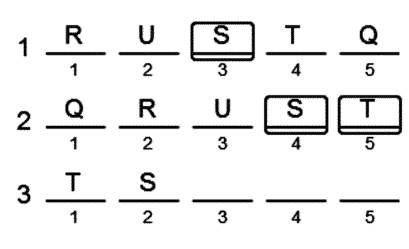
A is wrong because T must go first.
B is CORRECT. There is no rule stating that R can’t go third.
C is wrong. T has to be the one to go first because T was in 5.
D is wrong for the same reason. T was in 5 so T has to be in 1.
E is wrong because U hasn’t gone first. U can’t speak fifth.
Question 22
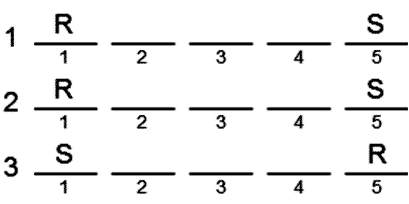
If R and S are the only ones that go first then they must also be the ones that go fifth.
S will go fifth on the first two meetings; R can’t because it is in first.
R will have to go fifth in the third meeting, when S is in first.
Remember, anyone who goes fifth has to go first somewhere else.
A can’t be true. R is the only one who can go fifth in meeting 3.
B can’t be true for the same reason. Putting anyone else fifth in meeting 3 would violate the rule that anyone speaking fifth must speak first somewhere else.
C can’t be true. S must always be either fifth or first.
D can’t be true. No one else can go fifth if we don’t put S there twice. R is in first in two places; R can only go fifth once. No one else can go fifth, because they would have to go first, too.
E is CORRECT.
Question 23
A and B are wrong. If T goes three times in 1 or 2 then there is no space for everyone else to go in spots 1 and 2 once. We only have three spaces left and four people to place.
C is CORRECT. We could put R in 1 and T in 2 at one meeting. In the other two meetings, T could go anywhere after R as long as we didn’t put T in fifth (T can’t go first if it is after R.)
D is wrong. All the variables are interchangeable. So if T could go after U and S then T could also go after R. It’s easier to put T after one variable than after two variables.
Therefore, D can’t be true because then C would be true also. We can’t have two correct answers.
That’s a useful trick. If you want a more real reason it’s because the earliest you could put T if you put it after S and U is third. T could never go in spots 1 or 2.
E is wrong. If you put T in 3 then one of R and U would have to go in fifth. But they could never go in first, because they can’t go before T. That doesn’t work.
But if you put T earlier you would either fill too many spots in 1 and 2 with T.
Question 24
We know we have to put Q and R in first: everyone must go first or second at least once.
We have space to put one other person as well. I put in S, for the sake of example. But it could also have been T or U, or even Q or R again.
Q or R will have to go fifth at least once, during the time when S goes first (in my example). S can’t go first and fifth at the same time, and no other variable can go fifth.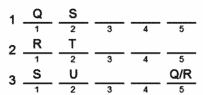
Everything would work the same if we put S (or T, or U) in first in meeting 1 or 2. Q or R would have to go fifth at least during that meeting. No one else would be eligible, because anything that goes fifth has to go first too.
(Q/R actually have to go fifth twice. In my example no one else can go fifth in the first meeting, because S is in 2. But the answer choice only says “at least once”, which is also true)
A is CORRECT.
B could be true but doesn’t have to be. We can put anyone in first in one of the meetings, as long as Q and R each go once too.
C doesn’t have to be true. We could put S in first in the third meeting and have him go fifth in the second. (for example).
D and E are wrong because there is no reason why Q and R would have to speak third or fourth. No rule forces anyone to go third or fourth. Why should Q or R go there?

Leave a Reply