
LSAT Preptest 25 LG Explanations
Full explanations for every question from the logic games section of LSAT Preptest 25.
Archived Logic Games explanations
Logic Games are no longer part of the LSAT. LSAC removed the Logic Games section beginning with the August 2024 LSAT. If you are studying for the current LSAT, you can skip this section.
These explanations remain available for students, tutors, and readers using old-format PrepTests. For current guidance, see Logic Games and the current LSAT.
Table of contents
Game 1: Planning and Trail Committees
Game 1 Setup
This is a grouping game. It looks a little uncertain, because we don’t know how many people are going to be in.
But it’s not that difficult. Three variables don’t have any rules!
Each committee needs at least three people (this only comes up in the first question.)
We know that F can’t be with K.

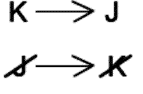
And K needs J. So if there is no J, there is no K.
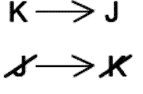
K is the most restricted variable: it has two rules. Some of the other variables don’t have any. H, G and L are all random. I always circle random variables.

And the last variable is M. It has to be in somewhere. I represented that by putting a box around it but you can do it however you choose. This isn’t a standard type of rule.

Lastly, the two committees must have at least one person in common. That’s easy because of all the random variables. There is no limit to how many people you can have on the committee as long as you have at least three.
We can’t do any elaborate setup. Remember that each committee needs someone in common. Then just make sure you’re clear with the two main rules, and apply them to each question.

Game 1 Main Diagram
Main Diagram
The setup section explains how to build this diagram.
This is a grouping game. A planting committee (P) and a trails committee (T) will be formed by selecting from seven volunteers (F, G, H, J, K, L, and M).




Question 1
A is wrong because there is no M.
B is CORRECT.
C is wrong because we have K without J.
D is wrong because trails only has two people and it needs three.
E is wrong because F is with K.
Question 2
It’s a good idea to draw the local rule in full. It makes it easier to think about.
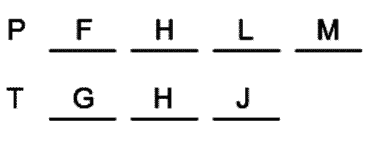
Ask yourself which rules are the most restrictive? We already have M. We already have H in common between P and T.
The only other rules are F can’t go with K and K can’t go with J.
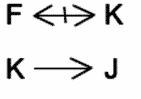
Both rules are about K and the question wants us to put K in.
K needs J, so we can’t put K in the first row.
We can’t replace J with K in the second row. Then there would still be no J with K.
We can’t replace H with K. Then there would be no variable in common between the two groups.
So we have to put K in the place of G. That doesn’t break any rules. We still have H in common and K has its J. B is CORRECT. Here’s what it looks like:

Question 3
The planting committee has exactly three people. They are all random variables. We have no rules for them. We know M has to go somewhere. We can put M in T. We can also put H, G and L in T, so that both groups have three people in common. We can’t give them anything else in common, because P is only allowed three people in this question. It looks like this:
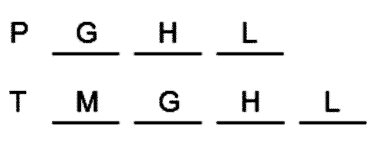
A doesn’t work. We can give P and T three variables in common.
B is false for the same reason as A.
C isn’t true. P can only have three people, but T must have at least four.
D is CORRECT. We could put more people on trails but we have to put at least four: H, G and L (in common with P) as well as planting.
E has to be false. Trails needs more than planting, because we put M in trails.
Question 4
If K is on both committees that means J is also on both committees.
If L is on both committees too then Planting already has three people: K, J and L. The question tells us we have exactly three, so that’s it. P is full. We have to put M somewhere. That means it’s going to go on trails.
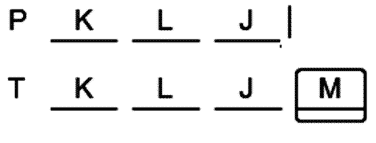
A is false. We have no more room on the planting committee.
B has to be false. We can’t put F with K.
C has to be false. We have no more room on the planting committee.
D has to be false. We have no more room on the planting committee.
E is CORRECT. We have to put M somewhere.
Question 5
Think about which rules prevent people from being together. There’s only one:

Everybody else can be in common. We can put the same six people on both committees, as long as we leave out either F or K from both.
D is CORRECT.
Game 2: Tourists and Tour Guides
Game 2 Setup
This is an interesting game. It depends on knowing the rules very well and one important deduction.
There are four tour guides and they each speak one or two languages. There are six tourists who all speak only one language each. The tourists have to be assigned to the guides.
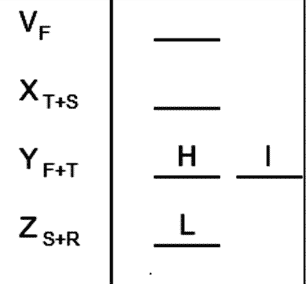
I found it easiest to draw the tour guides vertically. I wrote their languages beside them. H and I are assigned to Yossarian and L is with Zalamea.
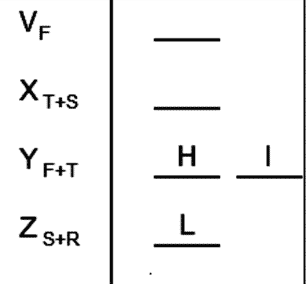
This means is L could speak Spanish or Russian. H and I could each speak either French or Turkish.
It’s important to note that every guide needs at least one tourist. We’ve got six tourists in total. Only K, M and N are left.
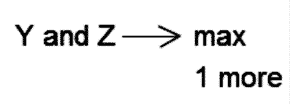
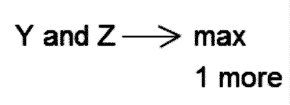
Two of those three have to go with Valois and X, at least. We have at most one extra person to put with Yossarian or Zalamea.
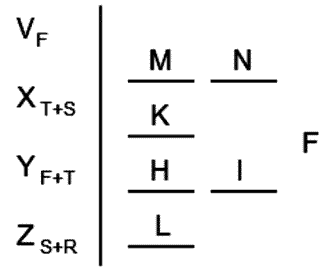
This gives you the answer to three questions: remember it. Deductions are very important! I usually just memorize it but you can draw it like this:
The other rule is: if K is with Xerxes then M speaks French. That is another way to say that M is either with Valois or Y.
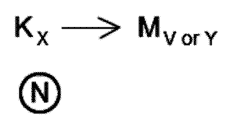
Lastly, N has no rules.
Game 2 Main Diagram
Main Diagram
The setup section explains how to build this diagram.
This is a grouping game. Six tourists (Harry, Irene, Klaus, Laura, Michael, and Norma) are assigned to one of four guides (Valois, Xerxes, Yossarian, and Zalamea) each. The guides speak French (F), Turkish (T), Spanish (S), Russian (R), or any combination of those.

Question 6
A is fine. K could speak Turkish and go with Xerxes, N could go with Valois. H could speak Turkish.
B is fine. K and N can both go with Valois and speak French. N can go with Xerxes.
C is a problem. The only person who speaks Russian is Zalamea. We would have to put both K and M with Zalamea. That leaves only N to go with Valois and Xerxes. One of them will be empty, which doesn’t work.
C is CORRECT.
D is fine. K and N could both speak French and go with Valois. M could go with Xerxes
E is fine. K and N could both speak Spanish. They could go with Xerxes. M could speak French and could go with Valois.
Question 7
There’s only one deduction that’s important for this question. Yossarian and Zalamea are given at most one more tourist, between the two of them:
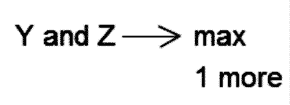
A is CORRECT. If you give Zalamea three tourists then there’s only one tourist left to go with Valois or Xerxes. There would be three with Zalamea and two with Yossarian. That’s too many.
B is wrong. Xerxes could be assigned two and we’d still have one person left to go with Valois.
C is wrong. Yossarian could be assigned a third person and we’d still have two left go between Xerxes and Valois.
D is wrong. Valois could be given two and we’d still have one left to go with Xerxes.
E is wrong. Zalamea could be assigned one more person and we’d still have two to go with Valois and Xerxes.
Question 8
A is wrong. There is no rule that tells what happens if K goes with Valois and M goes with Xerxes. This could be true.
B is CORRECT. If we give K to YossariaM and N to Zalamea then five people are with Yossarian and Zalamea. We’ve only got one person, M, to go with Valois or Xerxes. We can’t leave any of them empty.
Remember this deduction?
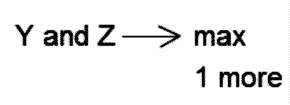
C is wrong, though very tempting. L is already with Zalamea. So giving L and N to Zalemea means just four people are with Yossarian and Zalamea. We could put N with Xerxes and K with Valois. C could be true.
D is wrong. There are no rules about N being with Valois and K being with Zalamea. If we give N to Xerxes, everything works out.
E is wrong. There are no rules about putting M with Xerxes and K with Z. We could still put N with Valois and everything works out.
Question 9
Laura speaks either Spanish or Russian. So K could speak Spanish or Russian. K can go with Zalamea or Xerxes.
A is wrong. There is no reason M and N have to speak Spanish. They can go with Valois and Xerxes and speak French and Turkish instead.
B could be true, but it doesn’t have to be true. K could speak Spanish and go with Xerxes instead of speaking Russian.
C could be false. L and K could both speak Spanish instead of Russian. K would go with Xerxes, M would go with Valois and N could go anywhere.
D could be false. We really need one person to speak French: the person who goes with Valois.
E is CORRECT. M and N are the only people left that can go with Valois. Valois only speaks French.
Question 10
L speaks Spanish or Russian (Zalamea’s languages). She can’t speak Turkish. Neither can N, because she speaks the same language as L here.
H and I are with Yossarian, so they could speak Turkish. That’s two.
We are left with K and M. We could put one of K and M in Xerxes and have them speak Turkish. The other has to go with Valois and speak French. That’s three total people that could speak Turkish: H, I and one of K and M.
B is CORRECT.
Question 11
If two tourists are assigned to Xerxes that means that we’ve got three people spread among Xerxes and Valois. (Valois always needs at least one tourist.)
So we can’t add any extra people to Yossarian or Zalamea. N must go with Xerxes. One of K or M will go there too.
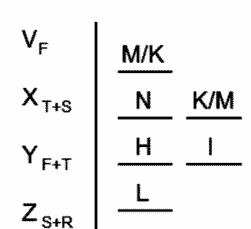
A is wrong. N would have to go with Zalamea to speak Russian.
B is wrong. N can’t speak French: she has to be with Xerxes.
C is wrong. N can’t speak French: she has to be with Xerxes.
D is wrong. If K and N speak Spanish then they would be with Xerxes. But they can’t be together with Xerxes. (third rule)
E is CORRECT. N can speak French and be with V, K can speak Spanish and be with Xerxes and N can be in Xerxes as well.
Question 12
There are two possibilities for this question. Either H, I, M and N speak French or they all speak Turkish. If everybody speaks Turkish, we would put M and N with Xerxes. K would go with Valois. It looks like this:
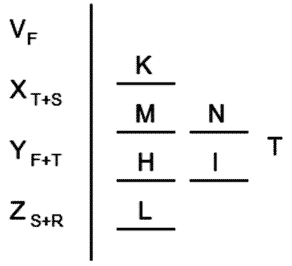
Or, if H, I, M and N speak French then M and N would go with Valois. K would go in X. It looks like this:
A is wrong. In neither scenario does K speak Russian.
B is wrong. We can only have one person speaking Russian with Zalamea.
C is wrong. We can’t have three tourists speaking Spanish. Only L and possibly K speak Spanish.
D is wrong. We can’t have two people speaking Turkish. Either none of them do or four of them do.
E is CORRECT. We could have K speak French, as in the first scenario. Four people speak Turkish.
Game 3: Tennis and Golf
Game 3 Setup
This game is a mix of grouping and sequencing. There are six people. They play either tennis or golf. They are ranked in order within the sports.
The first three rules are simple. Lina plays golf, Oliver plays tennis and Lina is always the highest ranked golfer. (The line means that Lina is ahead of whoever else plays golf)

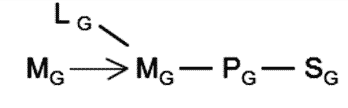
Maricella is the determining factor. If she plays golf then Paulo and Shigeru play golf. This is their order:
If Maricella plays tennis then Shigeru plays tennis instead. This is the order:

There is also a rule about Paulo. If he plays tennis then Kim plays tennis. We also know that Maricella plays tennis. Why? If Maricella played golf, Paulo would have to play golf, not tennis.
If Paulo plays tennis, we know everything. Five people play tennis, in the order below. Lina plays golf.
If Maricella plays golf, we know that Lina, Maricella, Paulo and Shigeru play golf, Oliver plays tennis and Kim can play either sport. So if we know where Maricella or Paulo go, almost everything else is decided.
Game 3 Main Diagram
Main Diagram
The setup section explains how to build this diagram.
This game is a mix of grouping and sequencing. Six players (Kim, Lina, Maricella, Oliver, Paulo, and Shigeru) play either golf (G) or tennis (T). Any sport played by multiple players has those players ranked from best to worst.

Question 13
A is wrong. If Maricella plays tennis then Shigeru does too.
B is wrong. If Paulo plays tennis, Kim plays tennis too.
C is CORRECT. If Paulo plays golf, we don’t know what Kim does.
D is wrong. If Paulo plays tennis then he ranks lower than Oliver.
E is wrong. If Maricella plays tennis then she always ranks lower than Shigeru.
Question 14
A is CORRECT.
If Maricella plays tennis then Shigeru is ranked in the middle between Oliver and Maricella.
If Maricella plays golf then Shigeru can’t play tennis. So he can’t be the lowest ranked tennis player.
B is wrong. Kim could be the lowest ranked if Paulo doesn’t play tennis.
C is wrong. Oliver could be the lowest ranked (and highest ranked) tennis player if everybody played golf, except for him.
D is wrong. If Paulo plays Tennis, either Maricella or Paulo could be lowest ranked.
E is wrong, for the same reason as D. Look back to the main diagram if you’re unsure about any of these.
Question 15
A is wrong. If Paulo plays tennis then Kim has to play tennis too.
B is wrong. If Paulo plays tennis, Kim is ranked higher than Oliver.
C is wrong. If Maricella plays tennis then Shigeru is ranked lower than Oliver.
D is CORRECT.
E is wrong. Oliver always plays tennis, but he’s not in the list.
Question 16
If Shigeru plays golf then we know that Maricella doesn’t play tennis. So Maricella golfs.
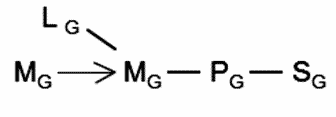
We know those four people, L, M, P and S are playing golf. O is playing tennis. K is the only uncertainty.
A and B have to be true. P, M and S all play golf.
C doesn’t have to be true because Kim can go anywhere. C is CORRECT.
D and E have to be true. P and L both have to play golf and M and S both have to play golf, per the diagram.
Question 17
There is only one rule that prevents Olivier from being highest-ranked: if Paulo plays tennis. So Paulo must play golf. That’s all we know. We don’t know if Kim plays golf, we don’t know if Maricella plays golf or tennis. We just know that Paulo plays golf.
A could be true. Maricella could play golf and Oliver would be highest ranked tennis player.
B is CORRECT. Lina always plays golf. And for this question, Paulo has to play golf.
C must be false. Paulo plays golf, not tennis.
D could be true. It doesn’t have to be true. Kim can play golf or tennis since Paulo is not playing tennis.
E could be true. It doesn’t have to be. There is no reason why Kim couldn’t play golf along with Paulo.
Question 18
If Shigeru and Paulo don’t play the same sport then Maricella can’t play golf. Why? If Maricella plays golf then Shigeru and Paulo both play golf. So Maricella plays tennis.
That means Shigeru plays tennis. So Paulo must play golf.
Kim could play golf or tennis. It looks like this:
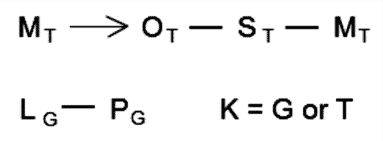
Notice that K is the only random factor. All of the wrong answers involve K. This is a could be true question, and anything could be true with K.
A could be true because K could play tennis.
B could be true because K could play golf.
C is CORRECT. S and M play tennis, so Paulo can’t play tennis.
D could be true because K can go anywhere.
E could be true because K can go anywhere.
Game 4: Dance Tunes and Ballads
Game 4 Setup
This is a mix of linear and grouping.
There are three ballads and four dance tunes. Whenever a game splits variables into two types, it’s extremely important to know, quickly, which variables are in which type. First you should write it out like this:

Second, you should note that the ballads are early in the alphabet, and the dance tunes are late in the alphabet.
The most important rule of the game is the first rule: you can’t play a dance tune right after another dance tune.
There are four dance tunes and seven spaces. There is only one way to split them apart.
You have to put a ballad in between all the dance tunes like this:

If you don’t believe me, I encourage you to try and order them in another way, but it’s impossible. If you switch anything you will then have two dance tunes together. Just knowing this order gets you the answer to many of the questions.
The other rules are straightforward. We always have V one before or one after S.

H is always before V.

F is always before or after S.

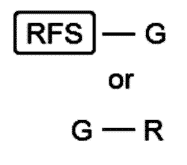
The last rule is harder, but not actually that difficult. If R is before G then we have R, F, S in order (F and S are always beside each other). If R is after G, nothing happens.

There is not really anything to combine. This is a game that depends on knowing all the rules: review them before moving on.
Game 4 Main Diagram
Main Diagram
The setup section explains how to build this diagram.
This is a linear/grouping game. F, G and H are ballads (b) and R, S, V, and X are dance songs (d). They will be played in an order.

 ,
, 
Question 19
A is wrong because S isn’t beside F.
B is wrong because R is before G, but R isn’t beside F.
C is wrong because V and S aren’t one away from each other.
D is wrong because V is before H.
E is CORRECT.
Question 20
A is wrong because there are no rules about X. It’s very easy to put X somewhere else. Here’s one way:

B is wrong as the same diagram proves that S can go third and doesn’t have to go fifth.
C and E are wrong as shown in the diagram above. We always have dance tunes right after ballads, and ballads right after dance tunes.
D is CORRECT. If you have a ballad after another ballad, then you’ll also end up with a dance tune after another dance tune.
Question 21
We know from our diagrams that the fourth song has to be a ballad. That means that R, S, V and X can’t be the fourth song. The right answer has to be G by process of elimination. A is CORRECT.
This is why it’s important to know which variables are ballads and which are dance tunes.

Question 22
We know that the first song has to be a dance tune. So it can’t be F and G: answers D and E are out.
The first song also can’t be V because H has to go before V. So C is wrong.
One of the diagrams that I did earlier shows that R can go first.

A is CORRECT. I explain below why B is wrong.
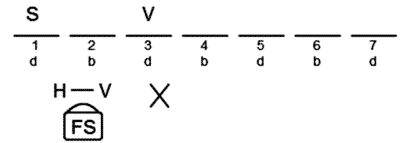
We can’t put S first. We have to put S one away from V, so V goes in 4.
We have to put F beside S. But we also have to put H before V.
There is no space to put both H before V and F beside S. There’s only one spot and two variables to put there.
Question 23
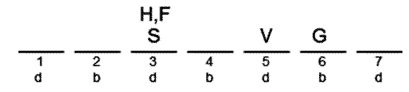
S is the third song, so we have to put V fifth.
We can’t put V first because H has to go before V.
There are only two ballad spots before V: 2 and 4. We must put F in one of them, because F goes beside S. H has to go in the other, because H is a ballad and goes before V.
There is one ballad spot left: spot 6. And there is only one ballad left: G. G goes in spot 6.
A is CORRECT.
Question 24
We’re asked about the fifth song, which we know is a dance tune. So it can’t be F, G, or H: those are all ballads.
That leaves us with answer choices D and E. Here’s what it would look if we put V in fifth:

You always want to draw these, to try them out. This diagram works. We need to put H and F in the first two ballad spots so that F is beside S and H is before V. We’ll put G in the sixth ballad spot and X will go first.

That works so D is CORRECT.
E doesn’t work. If we put X fifth, here is what we get:

V and S need to be separated by one space. We can only do that in 1 and 3. We put V in 3 because H must go before. But we also have to put F beside S. There’s no space for them both.

Leave a Reply