
LSAT Preptest 26 LG Explanations
Full explanations for every question from the logic games section of LSAT Preptest 26.
Archived Logic Games explanations
Logic Games are no longer part of the LSAT. LSAC removed the Logic Games section beginning with the August 2024 LSAT. If you are studying for the current LSAT, you can skip this section.
These explanations remain available for students, tutors, and readers using old-format PrepTests. For current guidance, see Logic Games and the current LSAT.
Table of contents
Game 1: Physics Students
Game 1 Setup
This game is a mix of linear and grouping. We’ve got eight variables, they’re all majors and non-majors.
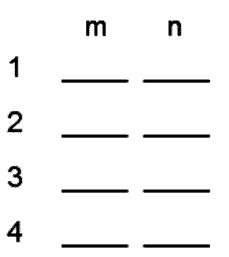
They go in four groups. There’s one major and one non-major per group. That’s from the first rule. If there is exactly one major then there must be one non-major to match. We can draw it like this:
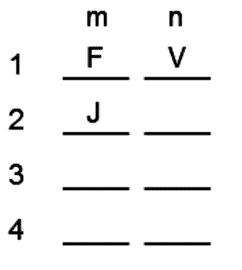
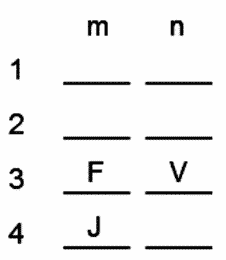
The next two rules set the game. F is always before J and F is always beside V. This can only go three ways. I always find it useful to draw each of them.
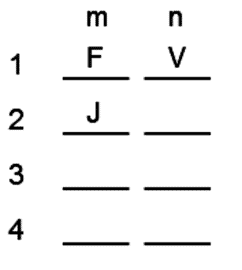
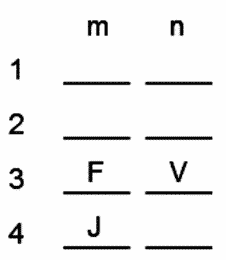
F is in 1, 2 or 3. Then we know where V and J go. We don’t get many deductions from these scenarios in this game, but deductions happen often enough that it’s worth drawing the scenarios every time. They also make things easier to visualize.
The last rule says G doesn’t go with W.

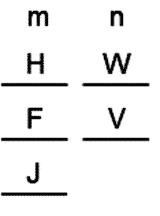
You should always list the variables, especially when they’re split into two groups.
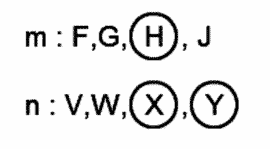
Majors come early in the alphabet, and non-majors come later. I’ve circled the one that have no rules. It’s important to know this.
Game 1 Main Diagram
Main Diagram
The setup section explains how to build this diagram.
This is a linear/grouping game. Frank, Gwen, Henry and Joan are physics majors (m) and Victor, Wanda, Xavier and Yvette are nonmajors (n). Each student is assigned to one of four benches, and each bench has two students.

Question 1
A is wrong because Joan and Gwen, two majors, can’t go together
B is wrong because Frank has to go with Victor, not Xavier.
C is CORRECT.
D is wrong because Joan has to go after Frank, not before.
E is wrong because Gwen and Wanda can’t go together.
Question 2
If Victor is on bench 2 then Frank must be on bench 2. If Wanda is on bench 4 then Gwen must go somewhere else. In this case bench 1 is the only spot left open. It looks like this:
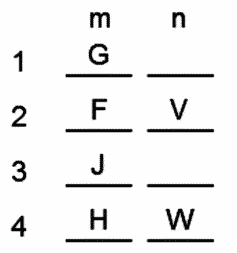
A can’t be true. F always goes with V, and V is in 2.
B has to be true and is CORRECT. F and J are in 2 and 3. And G can’t go in 4, because W is there.
C can’t be true because Joan goes in bench 3.
D and E both could be true but they don’t have to be. X and Y are interchangeable.
Question 3
Gwen and Henry are on not on consecutive benches. They must be on 1 and 4. If G and H were on 1 and 3, F and J couldn’t go together.
Since F and J go one after another, they’ll be in the middle. It looks like this:
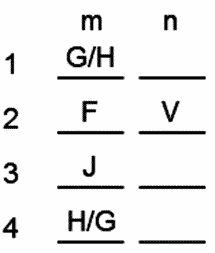
A is CORRECT. Victor goes beside Frank.
B can’t be true. If we put Frank and Victor in 3 and Joan in 4 then G and H would be consecutive.
C, D and E all could be true but don’t have to be. Wanda can go anywhere that is open as long as we put Gwen somewhere else.
Question 4
If H and Y are at bench 1 then there are two possibilities. We could put F and V in 3 or F and V in 2. Either way Wanda is going to have to go with Joan and then G and X will be together. It looks like this:
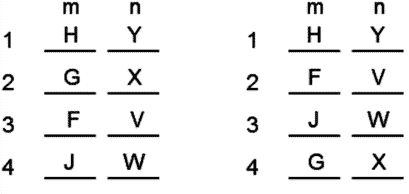
A is wrong because either F or J has to be in 3.
B is wrong because if J were in 2 then F would be in 1. H has to go in 1.
C is wrong. Either G and X go in 2 or F and V go in 2.
D could be true in the second scenario. F is in 2 and J is in 3: Wanda goes with J. D is CORRECT.
E can’t be true because G and X either go in 2 or 4.
Question 5
I always draw these local scenarios. There are two possibilities. Either F and V are in 2 or F and V are in 1.
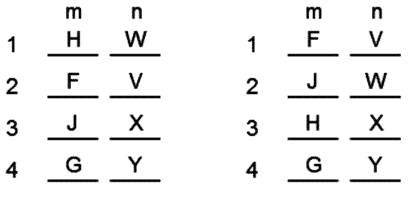
A is wrong. We always put Gwen on the same bench as Yvette.
B is wrong. In the first scenario we can put H with Wanda.
C doesnt’ have to be true. In the second scenario H is with X.
D doesnt’ have to be true. In the first scenario J is with X.
E can’t be true because Y is always with G. E is CORRECT.
Question 6
If Wanda is earlier than Joan then Wanda also has to be earlier than Frank. Frank is with Victor, not Wanda.
That means that we’ll put Henry with Wanda, because Gwen can’t go there. So Henry is also going to have to go earlier than Frank. They could all go in 1,2,3 or 2,3,4.
So A is CORRECT. H goes before F.
 (This is a partial ordering)
B could be true but it doesn’t have to be. We could put Gwen in the first spot.
C and E are wrong because X and Y are interchangeable. Either of them could go in 1 if G went there too.
D must be false because Victor is going to be after Wanda.
Question 7
This is another list question. Using the rules we can see that:
A is wrong because there is no space to put in F and J. Only 1 and 3 are left open but F and J have to be one-after-another.
B is wrong. It’s would force G and W to be together in spot 1. F and V would have to go in 2.
C is wrong. Joan is with Victor. We need Frank with Victor.
D is CORRECT. I’ve drawn another diagram to show how it would look:
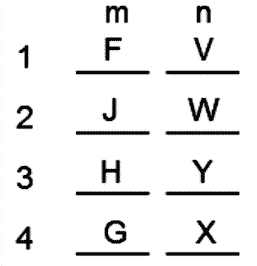
E is wrong because it would force G and W together in spot 3. F and V would be in spot 1.
Game 2: Package Deliveries
Game 2 Setup
This is a linear game with a very common setup. There are seven horizontal spaces. We can arrange it this way:

I always recommend reading all the rules first. It lets you draw them in the most logical order. For example, I’m going to start with first and last rules.
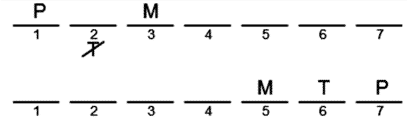
Whenever a game has you put something in only one of two ways you should draw it in both those two ways. P is either in 1 or 7, so draw those scenarios.
The last rule says there is exactly one package between P and M. So if P is in 1 then M is in 3. If P is in 7 then M is in 5. In theory, M could be before or after P. In practice, there’s only one option for M in each scenario, because P always goes on one of the ends.

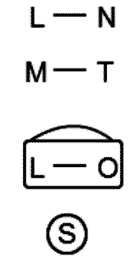
I also added the rule that M has to be before T. T is not in 2 in the first one and T is in 6 in the second scenario. The other ordering rule is that L is before N.

The last two things that we should note are that L is one away from O and that S is the random variable.
Game 2 Main Diagram
Main Diagram
The setup section explains how to build this diagram.
This is a linear game. Packages L, M, N, O, P, S, and T are being delivered in an order.
Question 8
A is wrong. L is not one away from O.
B is wrong. P has to be 1 or 7.
C is CORRECT.
D is wrong. L has to be before N.
E is wrong. P has to be after M
Question 9
A is wrong. N can’t be delivered first. L goes before N.
B is wrong. M has to be before T.
C is wrong. Either M is fifth and T goes sixth or M is third T has to go afterwards.
D is wrong. M is either 3 or 5.
E could be true, as this diagram shows:

E is CORRECT.
Question 10
Always draw local rules. Put N in fourth and see what has to be true.
We know that L is somewhere before N. We can’t put L in second because O has to be one space away from L. So we can either put L first or third.
A is CORRECT. This diagram shows a scenario that works:

B is wrong. If we put L second, we have to put O two spaces away: in fourth. But M is fourth.
C is wrong. If we put M third then we would have to put P first. Then L could only go in 2. But we saw that doesn’t work: there’s no place to put O.
D is wrong. If O is in fifth, L is in third and then there is no place to put M. M can only go fifth or third.
E is wrong. If S is first then L would go in third. Then O would have to go in 5. Just like in D, there is no place to put M. M can only go third or fifth.
Note: we could have put L in 3 and O in first to make a workable scenario, but none of the answer choices asked us of that.
Question 11
If T is fourth, then M has to go earlier than 4. So we have to put M in 3 and P in 1.

We need to put L and O one space apart and we need to put L before N. The only way we can arrange those three is if we put them in L, N, and O in the last three spots. Then S has to go in second by default.

C is CORRECT.
Question 12

There are two ways we could do this. We could put P in 1, O in 2, M in 3 and L in 4.
N, T, S go afterwards in either order: there are no rules left about them.

In this scenario, N, T and S can all go in 5. C, D and E are all wrong.
We could also put M in 5, T in 6 and P in 7. O, N, T and S go before M.
This shows that M could go in five. B is wrong.

A is CORRECT. There is no way to put L in spot 5.
Game 3: Movies Restaurants and Soccer
Game 3 Setup
This is a grouping game. There are three groups: movies, soccer and restaurants. There are five people. Exactly two people go in soccer. So between movies and restaurants, one will have one person and one will have two.
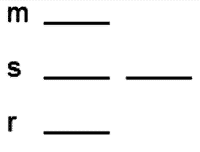
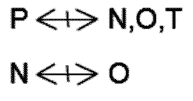
I left out the extra line for the fifth person. Just note that they can go with either M or R. And then, our restrictions. You can combine a couple of the rules to say that P doesn’t go with N, O and T. N doesn’t go with O.

So P is very restricted. P can only go with V, if P goes with anyone.
Lastly, if V or N goes to a movie then they both go to a movie.

We can draw this on our diagram and see what happens. If we put both V and N in a movie then we must put P in R. O and T go in S.
Why? P can’t go with O or T and we need two people to go in S.

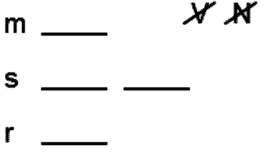
So on our other diagram we should point out that V and N don’t go in the movies.
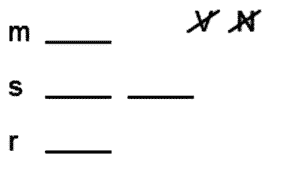
Some people get confused as to why I do this. It is to remind you that you already drew a diagram that shows what would happen if V and N go into the movies. So in all your other setups, V and N are not in the movies.
Game 3 Main Diagram
Main Diagram
The setup section explains how to build this diagram.
This is a grouping game. Nguyen, Olson, Pike, Tyler, and Valdez each participate in one activity. The activities are movies (m), soccer (s) or restaurant (r).

Question 13
A is wrong. It has O and P together at soccer.
B is wrong. It has P and T together at soccer.
C is wrong. It has N in soccer and V at a movie. If one is at a movie, they both need to be at a movie.
D is CORRECT.
E is wrong. it has three people at the soccer game. There must be exactly two.
Question 14
If Valdez is at a soccer game then there are only a couple possibilities. We know N isn’t at the movies (otherwise V would go to the movies.)
We could put V and N together in soccer and P at the restaurant. O and T are at a movie. It looks like this:
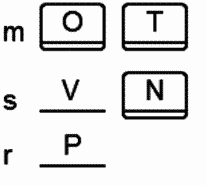
This diagram proves A, C and E wrong.
Or we could put P with V at soccer and still have O and T at the movies. N would go to the restaurant.
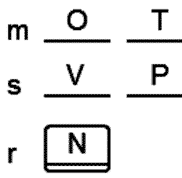
This proves B wrong.
D is CORRECT. We can’t put T in soccer. We have to put T in the movies. Otherwise, we would have to put N or P there.
If we put N in the movies then V has to go there too. If we put P in the movies then P is with O, which is a violation of the rules.
Question 15
Who can go to the movies together?
A is wrong. If N is at a movie, V has to be there too.
B is CORRECT. This proves it could happen:
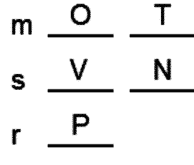
C is wrong. If you have V at the movies then you need N, too.
D is wrong. P and O can’t go together.
E is wrong. P and T can’t go together.
Question 16
A is wrong. If only Olson is at the restaurant then we’re left with V, N, P and T.
We need to put two people at the soccer game, and two are left for the movies. V and N will go together, since they’re either both at the movies or not at the movies. That leaves P and T, but they can’t go together.
B is CORRECT. You could have just P in the restaurant. This diagram proves it:
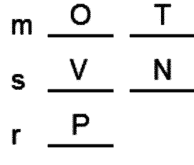
C is wrong. If only T is at the restaurant then we’re left with V, N, P and O.
We need to put two people at the soccer game, and two are left for the movies. V and N will go together, since they’re either both at the movies or not at the movies. That leaves P and O, but they can’t go together.
D is wrong. If only Valdez is at the restaurant then you have to put N at soccer. If you put N at the movies, then V would have to be there too.
That leaves P, T and O. P can’t go with either of them, and P can’t go with N, either. We can’t put P alone at the movies, because then three people would play soccer.
E is wrong. If T and V are at the restaurant then you need to put N in soccer, not the movies (otherwise V would go to the movies).
We need to put exactly one more person at soccer. We only have O and P left. Neither can go with N.
Question 17
If N is at the soccer game then we know that V is not at the movie (the last rule). So answer choices B and D are wrong.
O is in all of the answer choices. So the only question is: can we put P and T in?
This diagram proves that A and C are wrong. Pike can go to the movies.
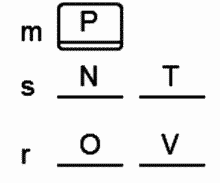
This diagram proves that O and T can go to the movies too.
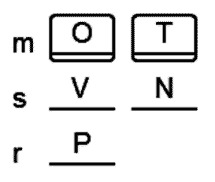
E is CORRECT.
Question 18
There are now three people at the soccer game.
If you look at the rules about P, you’ll see only V could go with P.
So if you put P somewhere, you can have maximum of two people in that place. So P can’t go to the soccer game: there aren’t enough people to go with him.
C is CORRECT.
Game 4: Lawmakers and Scientists
Game 4 Setup
This is a grouping game. We’ve got lawmakers and scientists. We need two from each group to be in. The rest will be out.
You should always draw your variable list so that you know who is who.
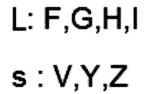
The letters earlier in the alphabet are lawmakers and the variables later in the alphabet are scientists.
We can draw this as four lines. We can put two lawmakers and two scientists underneath those lines.

Now for the rules: G can’t go with V, H can’t go with Y and I can’t go with V.
Also, someone needs to be the chairman in the first meeting and then they are not permitted in the second meeting.
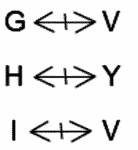
Some people get stuck here. They move onto the game and find it a horrible, agonizing experience. (Actually, that happened to me. )
But, looking at it again, I see there is a much simpler way. We need either I or V, but we can’t have both. Whether I or V is in almost completely determines the other people who can be in.
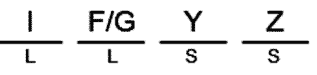
Let’s see what happens if you put I in. Then you can’t have V. V is a scientist so that leaves only two scientists, Y and Z. H can’t go with Y so we can only put F or G in.
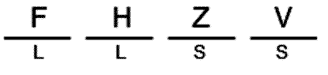
Now, what if we put V in? Then we can’t have I or G. That leaves only two lawmakers: we need F and H. H means that we can’t have Y. The only remaining scientist we can use is Z.
Amazing. There is just two ways to set up the rows. They are reversible. We could also use the same row twice, if we switched out the chairman from the first year.
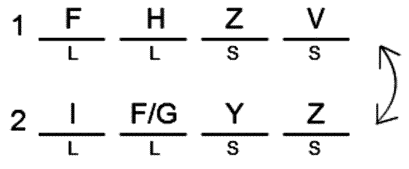
We have to think about who can be chairman.
If we put F, H, Z and V in the first row then F can be the chairman in the first row. Z can be chairman in the second.
If we reversed the rows then G could be the chairman in the first row. Z could be chairman in the second.
There’s other possibilities, just know that we can create working scenarios no matter which order the rows are in.
Could we use the same row twice? Yes. We just have to make sure to obey the rules about chairmen.
This game is incredibly restricted. Whether we put in I or V determines almost everything. This shows why it’s worth trying things out on paper before starting. Often you’ll learn something that just makes the rest of the game incredibly easy.
Game 4 Main Diagram
Main Diagram
The setup section explains how to build this diagram.
This is a grouping game. Feld, Gibson, Hsu and Ivins are lawmakers (L) and Vega, Young, and Zamora are scientists (S). A panel in a given year will consist of two scientists and two lawmakers, one of which will be the chairperson.
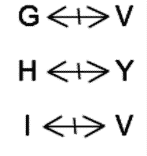
The chairman in year 1 is off in year 2. The chairman in year 2 was on in year 1.

Question 19
A is wrong because G and V are together.
B is CORRECT.
C is wrong because I and V are together.
D is wrong because we need two scientists. We only have Z.
E is wrong because H and Y are together.
Question 20
If V is chairman in year 1, then they are off the panel in year 2. . Our diagram looks like this:
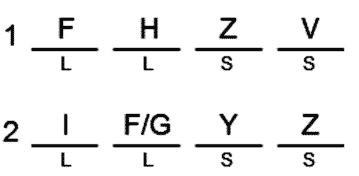
We need I, Y and Z in year 2. D is CORRECT.
A and B are wrong because Gibson could be replaced with F.
C is wrong. H can’t be there since Y is there.
E is wrong. V can’t be there since I is there.
Question 21
If H is chairperson in the first year then we have the same diagram as before.
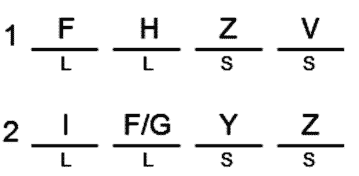
A is CORRECT. F could be in both years.
B is wrong. G can’t be chairperson in the second year. They weren’t there in the first year.
C is wrong because H isn’t in the second year. The chairperson from the first year can’t sit on the second panel.
D is wrong because I wasn’t in the first year.
E is wrong because Y wasn’t in the first year.
Question 22
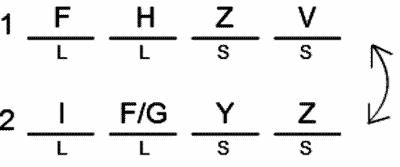
Look at the main diagram and see who can or can’t go with F. Everyone can go with F, with one exception.
If F is in, then G is out on line 2. So A is CORRECT. F and G can never go together.
Question 23
If I is chairperson in year 1, I can’t be on the panel in year 2. Our diagram looks like this:
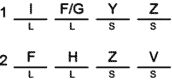
The only two people who could be chairperson in the second year would be Z or F. They are the only people who can be in the first and second years. A is CORRECT.
Question 24
For this must be true question, just look at both of our possible panels. Remember that they are reversible, and we could use one panel twice. Z is the only person who has to be on both panels.
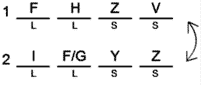
A is wrong because F doesn’t have to be on the panel in both years. G could fill in for F one year instead.
B is wrong. H is only on the panel in one year. It could be the first year, but that panel could also go in the second year (or never). Remember this diagram is reversible.
C is wrong. I doesn’t have to be there if V is there.
D is wrong. We can have a working year without Y, if H is there.
E is CORRECT. Z is always on the panel, no matter who else goes there.

Leave a Reply