
LSAT 68 LG Explanations
Full explanations for every question from the logic games section of LSAT 68.
Archived Logic Games explanations
Logic Games are no longer part of the LSAT. LSAC removed the Logic Games section beginning with the August 2024 LSAT. If you are studying for the current LSAT, you can skip this section.
These explanations remain available for students, tutors, and readers using old-format PrepTests. For current guidance, see Logic Games and the current LSAT.
Table of contents
Game 1: Houses
Game 1 Setup
This is an explanation of the first logic game from Section IV of LSAT 68, the December 2012 LSAT.
A realtor will show seven houses (J, K, L, M, N, O, P) to a buyer. You must place them in order.
This is a straightforward linear game, only slightly complicated by the addition of morning, afternoon and evening groups. Here’s how you can draw the groups separated:

I drew M, A, and E on this diagram just to make it clear. But I don’t actually think you need to include those on your diagram. You know intuitively that morning is first, afternoon second, evening last. So the two separator lines are enough to divide the groups. I’m leaving out M, A, E on the other diagrams.
You can draw the first and second rules directly onto the diagram.
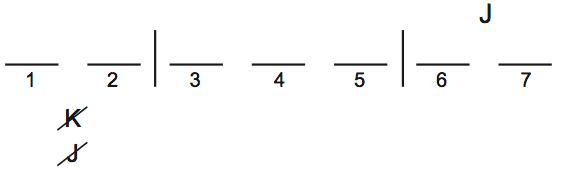
I put J above evening to show that J goes in one of those two spaces. It doesn’t matter which one.
I also placed a ‘not J’ underneath morning, to remind myself that J can’t go there. Likewise, K is not in the morning.
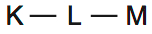
Next, K – L – M must go in that order:

This affects our main diagram. K goes in the afternoon, at the earliest, because K can’t go in the morning (rule 2). Since L and M come after K, that means they also can’t go in the morning:
You could stop there, but there’s more to deduce. This is a fairly restricted game. First, let’s identify the random variables, those with no rules:
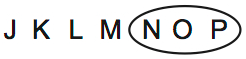
N, O and P have no rules. These are also the only variables that can go in the morning.
This is an important deduction. Two out of three of N, O and P must be in the morning. If one of N, O and P is not in the morning, then the other two are.
K and L are also quite restricted. They can only go in the afternoon. Why? Let’s try putting them as near to the end as we can:
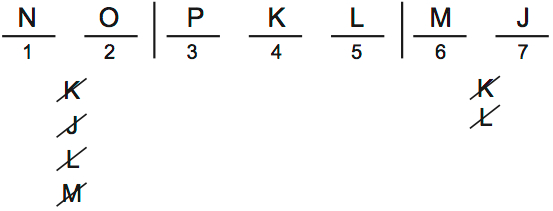
There’s no space for K or L to be shown in the evening. J and M fill up the evening. J always has to be there, and M always comes after K and L.
So here’s the full diagram:
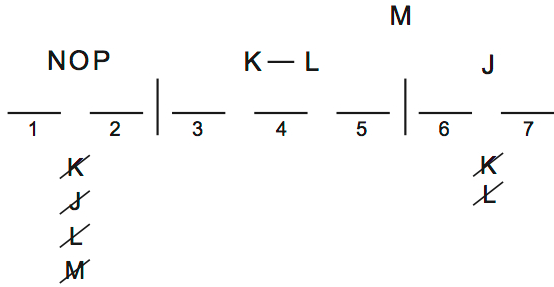
NOP are above the morning as a reminder that two of them go there. J is above evening because it must go there.
K-L are in the afternoon, so I placed them above that space.
M is somewhere after K – L. It could be in the afternoon or evening, so I put it between the two groups.
There’s no need to draw M there, but I find it helpful to be able to visualize all 7 variables above the main diagram, roughly where they must be place. It’s easy to waste time forgetting which letters are left.
It’s very important to understand the NOP and K-L deductions before moving on. Most of the questions test whether you understood that only NOP can go in the morning, and that KL can’t go in the evening.
A Simpler Diagram For The Questions
You don’t have to repeat the full diagram on all questions. I’m repeating the full diagram in my explanations only because (I hope) it makes these explanations clearer. I may edit these later to remove the M, A and E from the groups, I don’t think they’re necessary, and I wouldn’t have drawn them on my main diagram if I were just doing the game on my own.
But you should draw simpler diagrams on local rule question. Here is how I would actually draw the scenario I drew two diagrams above, if I were doing it in pencil for a question:

My main diagram has all the deductions, and I’ll refer back to that when building a local scenario. Do not draw in your main diagram when you do games, always make new diagrams for each question that requires them.
Game 1 Main Diagram
These diagrams show the rules used to decide when the realtor will show the houses (J, K, L, M, N, O, P).
Refer to this diagram when solving this game. Copy it on your own page, and on each question make a new version of it in order to follow along with my explanations. You’ll learn much more if you draw along.
The setup section explains how to build this diagram.
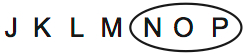
These last two diagrams are somewhat superfluous, but it’s sometimes useful to include them to remember why you made the deductions that are on your diagram. The circle around NOP shows that they have no rules. (though as we saw in the setup, two of them must go in the morning)
Question 1
For list questions, you should run through the rules one by one and eliminate wrong answers.
The first rule eliminates E. J has to be shown in the evening.
The second rule eliminates A. K can’t be shown in the morning.
The third rule eliminates B and D. K-L-M must go in that order.
C is CORRECT.
Question 2
A is CORRECT.
J and K can’t be shown beside each other because J goes in the evening, and K must go before L and M.
Here’s the closest J and K can get to each other:
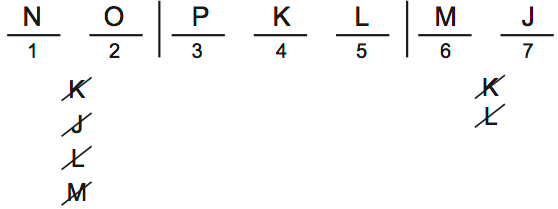
The diagram also proves that M can go beside J.
C, D and E were not likely candidates, because they include P and O, which are random variables. P and O can go practically anywhere.
Question 3
Here’s the main diagram again:
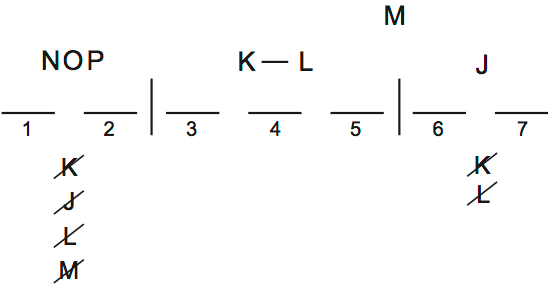
A is wrong because K cannot be shown in the evening.
B is CORRECT. Both K and L can only go in the afternoon.
This is because K can’t go in the morning, and L goes after K. L can’t go in the evening, because M goes after L. There’s only space for M and J in the evening.
C is wrong, because L cannot go in the evening.
D is wrong because M cannot be shown in the morning. M must be shown after K, and K cannot be shown in the morning.
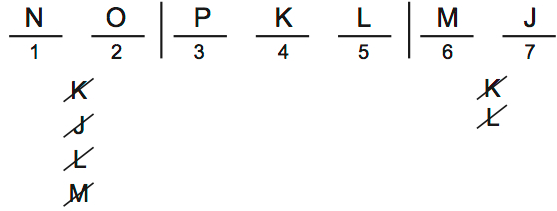
E could be true, but it doesn’t have to be. Here’s a scenario where M goes in the evening:
Question 4
A and B are wrong because neither K nor L can go in the evening. K and L have to go before M. There’s only space for J and M in the evening.
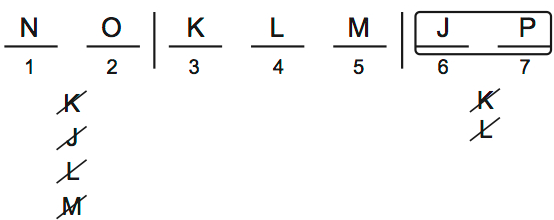
C is CORRECT. P is a random variable, so there is no reason it can’t be shown after J. Here’s a diagram that shows one way it could work:
D and E may seem tempting, because they use random variables. The problem is that they each use two random variables.
We saw in the setup that N, O and P are the only houses that can be shown in the morning. So two of them must be shown in the morning.
So two of these variables can’t go after M or after K, because then there would only be one left to go in the morning.
Question 5
There is only one thing you know about N, O, and P: two of them have to be in the morning.
When a question introduces a local rule, you can assume it has an impact on the main diagram.
Here, P is shown in the afternoon. That means that only N and O are left to go in the morning. They both must go in the morning.
E is CORRECT.
Here’s a diagram of the local rule. Note that NO are interchangeable:
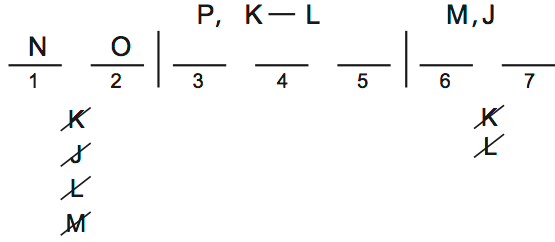
P, K-L must be in the afternoon. M and J must be in the evening, since M goes after K – L.
Apart from that, the order doesn’t matter.
A is wrong because M can always be shown 7th.
B is wrong because P could be shown 3rd, before K.
C is wrong because O could be shown first instead. O and N are reversible for this question.
D is wrong because M has to be shown in the evening. P, and K – L fill the afternoon.
Game 2: Witnesses
Game 2 Setup
This is an explanation of the second logic game from Section IV of LSAT 68, the December 2012 LSAT.
Five witnesses testify at a hearing: Franco, Garcia, Hong, Iturbe and Jackson (F, G, H, I, J). They testify on either Monday, Tuesday or Wednesday (M, T, W).
I normally refer to all the people by letters. In this case I’m going to use Iturbe’s full name. Calling him ‘I’ makes for some weird sentences.
Main Diagram
This is a grouping game. It’s easiest to draw vertically.
If you’re ever unsure how to draw a game, look to the first question. Usually, the way things are set up in the first question is also the best way to draw the game, though there are some exceptions.
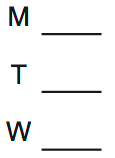
That’s the basic template.
Rules
The first rule is that F and G don’t testify on the same day. You can’t show that on the diagram. Here’s how you should draw it:

The other rules can all be shown on the diagram.
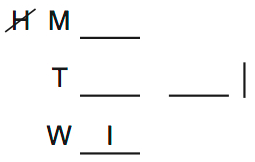
I placed Iturbe directly on Wednesday. I filled in a blank spot for Monday, since the final rule says at least one person testifies then.
I drew two lines for Tuesday, thanks to rule 3. The vertical line shows that no more than two people testify.
The final thing you should do is identify the random variables. In this case, J has no rules. You can represent random variables with a circle:

Pay Attention To Numbers
The F/G rule is important. There are only three groups in this game: M, T, W. Some questions artificially fill one group. The means F and G are split between the remaining groups.
It’s also important to think about the total number of spaces. There are only five, and Tuesday always has two people who testify.
Monday always has one person, and Wednesday always has Iturbe. That leaves just one more spot. So either two people will testify Monday, or two people will testify Wednesday.
Game 2 Main Diagram
These diagrams show the rules used to decide when (M, T, W) the witnesses (F, G, H, I, J) will testify at the hearing.
Refer to this diagram when solving this game. Copy it on your own page, and on each question make a new version of it in order to follow along with my explanations. You’ll learn much more if you draw along.
The setup section explains how to build this diagram.


Question 6
For list questions, you should run through the rules one by one to eliminate answers.
Unusually, the first rule eliminates no answers.
The second rule eliminates A, B and C. Iturbe has to testify Wednesday.
The third rule eliminates E. There must be two witnesses testifying on Tuesday.
That leaves only D, which violates none of the other rules. D is CORRECT.
Question 7
You’re not given much guidance on this question. It’s a cannot be true, and there is no local rule.
The best strategy is to quickly scan through all five answers, and identify those that seem most likely to violate rules. You should consider which variables are most restricted.
A and B are not good candidates. F’s only restriction is that F can’t go with G. Neither of these rules seem likely to place F with G.
The other three answers involve enough variables that they might break rules. It’s often best to make quick sketches that prove a scenario can happen.
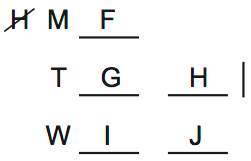
This scenario proves C can work:
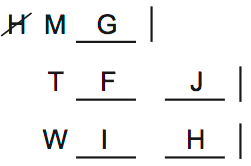
This scenario proves D can work:
If you have trouble seeing that these diagrams are correct, then it’s possible you don’t have a strong grasp of the rules.
You should know the rules like that back of your hand – spend some time learning them before you start the questions. This will speed you up and allow you to make correct diagrams quickly and effortlessly.
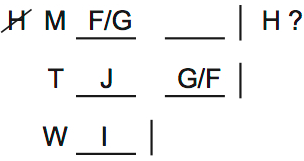
E is CORRECT. If you put two people on Monday, and Jackson testifies Tuesday then the diagram looks like this:
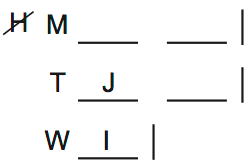
F and G have to go on different days. That leaves one place open on Monday. H is the only variable left, but H can’t go there, because H can’t testify Monday.
Question 8
You should always draw local diagrams when a question gives you a new rule.
Here, Iturbe and J testify Wednesday. That means only 1 person testifies Monday.
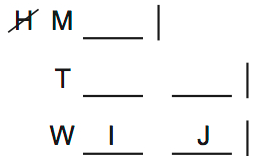
F and G are split between Monday and Tuesday, because they cannot testify on the same day.
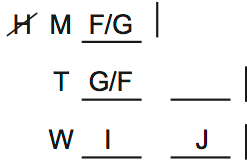
That leaves H to go on Tuesday. Everything is settled.
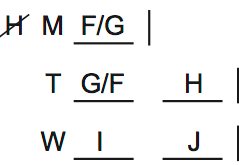
A and B are wrong because G and F are interchangeable. They could each go on either day.
C is CORRECT. If there are two witnesses on each of Tuesday and Wednesday, then there is only one left for Monday.
D is wrong, for the same reason C is right.
E is wrong for the same reason A and B are wrong. G could go on Tuesday with H, but G could also testify Monday.
Question 9
If J is the only witness on Monday, then that means two witnesses testify Wednesday. Tuesday always has exactly two witnesses.
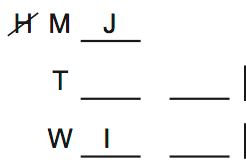
There are only two groups open now. Since F and G can’t testify on the same day, one will testify Tuesday and one will testify Wednesday.
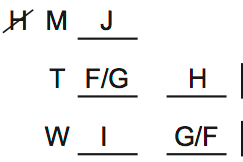
H goes Tuesday, because that’s the only open space left.
B is CORRECT.
All the wrong answers involve F and G. They can’t be correct answers for a must be true question, because F and G are interchangeable.
Question 10
F and H can only testify together on Tuesday.
They can’t testify Monday because H can’t testify Monday (rule 4)
They also can’t go Wednesday. Then there would be three people on Wednesday, because Iturbe always testifies Wednesday.
That leaves only G and J to testify on Monday and Tuesday. That’s not enough, since one person must testify Monday (rule 5) and two people testify Tuesday (rule 3).
So if they testify together, F and H testify on Tuesday:
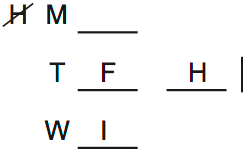
That’s really all we know. At this point, rather than think about all the possibilities, it’s better to just look at the answers and see if you’ve already solved the question.
D is CORRECT. H has to testify Tuesday. The other answers either can’t be true, or could be true but don’t have to be true.
Game 3: Service Targets
Game 3 Setup
This is an explanation of the third logic game from Section IV of LSAT 68, the December 2012 LSAT.
A maintenance company takes service requests from three clients: Image, Solide and Truvest. The service targets are set either by voicemail or through the company website.
This is a complex game. I’m going to use a few symbols that aren’t often used in logic games. To make these clear, I’m going to give you a math refresher.
Greater Than Signs (Aaah, Math!)
This is a greater-than sign. It means that what comes on the left (or first) is bigger than what comes after.

For example, 6 is bigger than 5:

This next sign is a greater-than-or-equal sign. It means that what comes first is the same size as what comes second, or it’s bigger.

For example, 7 is greater or equal than 7 (it’s equal) and 8 is greater or equal than 7:

6 would not work, because 6 is smaller than 7.
If you’re not familiar with these symbols, you should get comfortable with them. They’re occasionally useful in logic games.
The Main Diagram
So, there are three clients, and two different targets for each client: a voicemail target and a website target.
The clients are the base of the diagram. I represented them horizontally, though you could just as easily represent them vertically. That difference rarely matters.
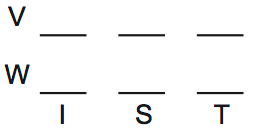
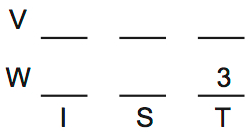
This game is a little tough to wrap your head around. Service target are just numbers that get written in this diagram. So if T’s website target is 3, then you would write in in like this:
The First Rule And Its Restrictions
The rules restrict what numbers we can set the targets to. The first rule says that clients can’t have website targets that are longer than their voicemail targets.
This means that the voicemail targets are greater than or equal to the website targets. Which is why I showed you the greater than or equal to mathematical symbol. Here’s how I represented that on the diagram:
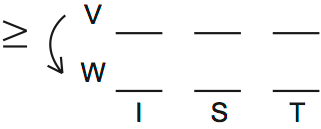
This is a non-standard game. I’ve never seen a game that required this type of symbol before (arrow + greater-than). So the exact symbol you use isn’t that important. You should only worry about perfecting symbols when a rule occurs in many games.
I’m going to draw the third rule next. S’s website target is shorter than T’s. This means T’s is greater than. This is not the same symbol from the first rule, since the two targets can’t be equal.
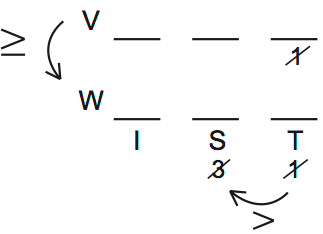
Since the arrow goes from T to S, that means that T is bigger, since it is at the start of the arrow.
This a bit ambiguous, because the greater than side is facing S. I found this way clearer, but feel free to reverse it in your own diagram if you prefer.
Now, I’ll explain the not rules I drew on the diagram.
T’s website target can’t be 1, because then it couldn’t be bigger than S’s website target. Likewise, S’s website target can’t be 3.
Since T’s website target can’t be 1, that means T’s voicemail target also can’t be 1. The voicemail target has to be bigger or equal to the website target.
S Restricts T
If S’s website target is 2, then T’s website target has to be 3. T’s voicemail target also has to be 3, since it has to be larger or equal.
If S’s website target is 1, then T’s website target can be 2 or 3.
Two Scenarios, Using The Second Rule
Now, the second rule. Image’s voicemail target is shorter than the other two clients’ targets. The targets can only be 1, 2 or 3.
That means Image’s voicemail target can only be 1 or 2 days. If Image’s target were 3, then the other targets couldn’t be bigger.
Whenever there are only two possibilities, it’s good to draw them both and see what happens.
(technically, there are also only two possibilities for S’s website target. I’m splitting based on Image’s voicemail target because this leads to more restrictions. Image’s voicemail target also restricts Image’s website target)
In the first scenario, Image’s voicemail target is 1 day. This means Image’s website target is also 1 day, since is has to be smaller or equal than the voicemail target.
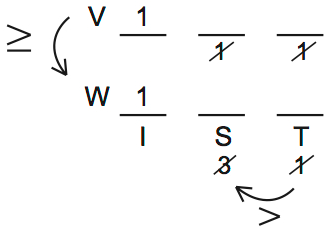
S and T’s voicemail targets can’t be 1, because they have to be larger than Image’s website target.
That’s all we can deduce for the first scenario. For the second scenario, Image’s voicemail target is 2.
That means S and T’s voicemail targets are 3, because the second rule says their voicemail targets are bigger than Image’s.
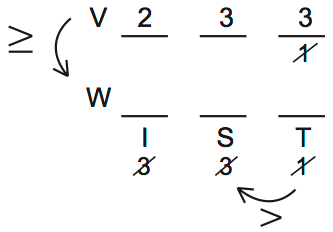
Image’s website target can’t be 3, because the website target must be smaller or equal to the voicemail target.
That’s all we can deduce for this diagram. Still, making this deduction upfront simplifies things.
Game 3 Main Diagram
These diagrams show the rules used to set the service targets (V, W).
Refer to this diagram when solving this game. Copy it on your own page, and on each question make a new version of it in order to follow along with my explanations. You’ll learn much more if you draw along.
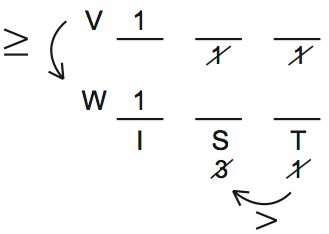
The setup section explains how to build this diagram. There are two main scenarios.
Main Diagram
Scenario 1 (Image’s voicemail is 1)
Scenario 2 (Image’s voicemail is 2)
Rules
- Voicemail is at least as big as website
- Image’s voicemail target is smaller than S and T’s voicemail targets.
- S’s website target is smaller than T’s website target.
Most problems in this game come from forgetting one of these three rules. Try to memorize them, it’s easier than it seems. As a back-up, make a clear list you can refer to quickly.
NOTE: Even I find website and voicemail incredibly confusing on this game. It’s easy to mix them up.
If you don’t understand something, there’s a good chance you’ve mixed them up. Keep that possibility in mind as you read the explanations.
Question 11
If the first question is not a list question, then that is a strong sign that you should have made deductions before trying the questions. This is not a list question.
In the setup, I made two scenarios. The second scenario had two voicemail targets that were 3. So that scenario isn’t allowed on this question. Here’s the first scenario instead:
Since no voicemail target can be 3 on this question, there is only one option for S and T’s voicemail targets. They have to be bigger than Image’s voicemail target, so they must both be 2.
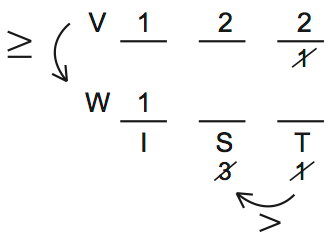
There’s only one rule left to apply. T’s website target is bigger than S’s website target. There is only one possibility:
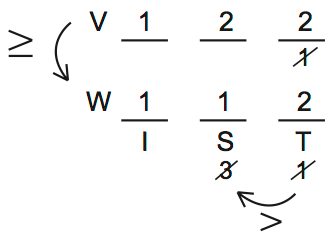
T’s website target can’t be 3, because the website target has to be smaller than the voicemail target.
B is CORRECT.
Question 12
This questions restricts the possibilities for T’s website target. It now can’t be 3, because it has to be smaller than the voicemail target (instead of smaller or equal).
T’s website target also can’t be 1, because rule 2 says T’s website target has to be bigger than S’s website target.
So this is the only possibility. T’s website target is 2, and their voicemail target is 3. S’s website target is 1:
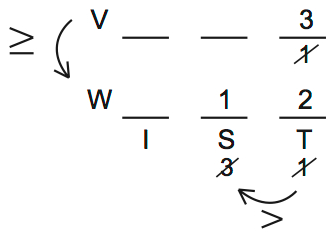
At this point, you could try to see if anything else has to be true….but that looks complicated.
When you make a deduction, it’s better to scan the answers and see if you already solved the question.
In fact, this diagram does solve the question! E is CORRECT.
Question 13
There are only two scenarios for Image. In the first scenario, the voicemail and website targets for Image were both 1.
That doesn’t work for this question. The voicemail target can’t be 1, because then it would be smaller than the website target (rule 1)
So we must be in the second scenario from the setup. I added in this question’s rule that Image’s website target is 2:
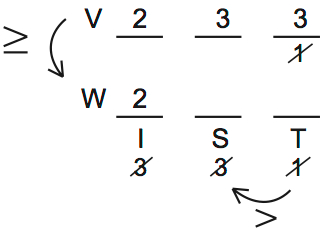
As with the last question, at this point you should simply scan the answers and see if the diagram solves the question.
It does. A is CORRECT.
Question 14
This is the only question that mixes website targets and voicemail targets.
Let’s review what we know about S’s voicemail target.
It is shorter than T’s website target (for this question).
It is longer than Image’s voicemail target. (rule 2)
That means S’s voicemail target is 2, since it’s in the middle of the other two. Here’s the diagram:

Image’s voicemail target is 1, due to rule 1. Website targets must be smaller or equal to voicemail targets.
Likewise, T’s voicemail target is 3, due to the same rule.
The question is asking which slot can have a target of 2 days. The diagram proves that A, B, D and E are wrong.
C is CORRECT. S’s website target can be 2 or 1, both of which are smaller than T’s website target.
Question 15
Bigger numbers are more restricted, as many rules say that certain targets must be smaller than other targets.
A is wrong because both Image and S could have 1 day website targets. It’s easy to make website targets small.
B is wrong. This scenario proves it:
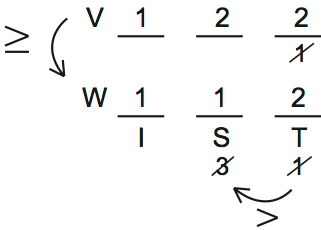
C and D are wrong. This scenario proves it:
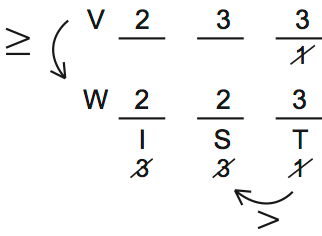
E is CORRECT. Image’s website target can never be three, because Image’s voicemail target has to be at least as big, and rule 2 says Image’s voicemail target cannot be 3.
S’s website target can never be 3, because it must be smaller than than T’s website target.
So only T’s website target can potentially be 3.
Question 16
It sounds like there are many possibilities for this question. But actually, there aren’t. If you get frozen, the easiest way to make progress is to just try drawing something, and you’ll see they’re quite restricted.
T’s website target has to be bigger than S’s. Since we can’t use 2, the only possibility is 3 and 1.
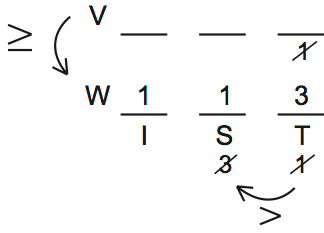
We can also say that Image’s website target is 1, since it can never be 3 and now it can’t be 2.
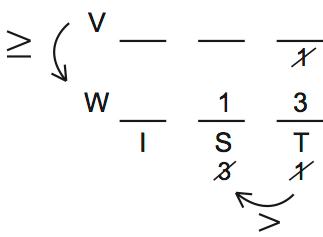
Lastly, T’s voicemail target is 3, since the voicemail target has to be at least as big as the website target (rule 1)
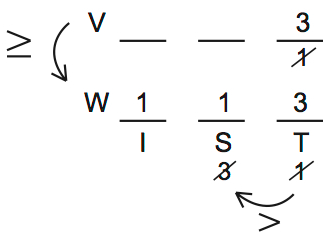
If you look through the answers, you’ll see that they’re all contradicted by the diagram, except one.
C is CORRECT. T’s voicemail target could be 3, S;s could be 2, and Image’s could be 1. The question only says that website targets can’t be 2.
Game 4: Articles
Game 4 Setup
This is an explanation of the fourth logic game from Section IV of LSAT 68, the December 2012 LSAT.
An editor will edit seven articles. You have to place them in order. G, H and J are finance articles, Q, R and S are nutrition articles, and Y is a wildlife article.
This is one of the hardest LSAT logic games I’ve ever seen. Don’t feel bad if you didn’t do well. I had 15 minutes left, and still managed to get three questions wrong. That never happens to me.
On my second attempt, I got everything right, but still felt stressed and confused. I worked on it with students a few times, and still didn’t feel like I had found the secret to the game. Again, that is not typical for me.
It turns out, there is no secret to this game. There are a few tricks to make things faster, but no magic bullet.
To make sure it wasn’t my own blind spot, I checked other explanations and spoke to other tutors. No doubt about it: this is a hard, hard, game, and there no missing key that will make it easy.
Setting Up The Game
The game actually looks straightforward. There are no major deductions to be made in the setup. Let’s see what we can determine.
First, the groups are unusually important in this game, because no article from f or n can be edited beside another from the same group.
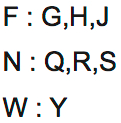
Note that the letters are in alphabetical order. You should try to memorize GHJ and QRS. You can also draw them separately as a reminder:


I’m going to do the second rule last. You should always read the rules before drawing: sometimes the best order to draw them in differs from the order they are presented in.
The third rules places S earlier than Y:

The final rules places J, G, R in that order:
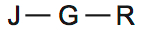
The Second Rule Can Go Two Ways
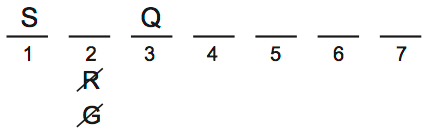
Now we can look at the second rule. It has an interesting effect. If S is earlier than Q, then Q is third.
So S could go 1st or 2nd….except, S and Q are in the same group. S can’t go in 2, because then it would be beside Q. So S has to be 1st if it is before Q.
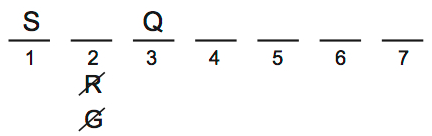
R and G can’t go in 2, because they have to go after J. There are no other deductions, but keep this scenario in mind. It fills up easier than the alternative, which is useful for could be true questions.
If Q is not in third, then Q has to be before S and we get this chain of deductions:

There Are No Deductions
There’s nothing we can do to combine the rules. The most important part of this game is the interaction between the ordering rules (Q – S – Y and J – G – R) and the blocks that can’t go together (QSR, JGH)
In particular, QS can’t go together, and JG can’t go together. This restriction often forces the ordering rule to be placed in only 1-2 ways.
Game 4 Main Diagram
These diagrams show the rules used to decide when to edit the articles (G, H, J, Q, R, S, Y).
Refer to this diagram when solving this game. Copy it on your own page, and on each question make a new version of it in order to follow along with my explanations. You’ll learn much more if you draw along.
The setup section explains how to build this diagram.
This main diagram is unusual in that there is nothing we can place on it. (you could place a not rule for R and G in spot 1, but I chose not to)

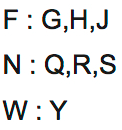
Remember that G, H, J and Q, R, S cannot go beside each other. You can draw that separately like this:

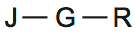
I’ve combined the second rule with the third rule. This makes Q-S-Y, in all situations where Q isn’t third.
One important thing to notice is that in Q-S-Y, QS can’t go together, and in J-G-R, JG can’t go together.

Scenario where S – Q:
Question 17
For list questions, the best approach is to go through the rules one at a time. Apply a rule to each answer choice and see what you can eliminate, then repeat.
The first rule eliminates B. G and H have the same topic, so the can’t be beside each other.
The second rule eliminates A. S is before Q, and Q is fourth. S can only be before Q is Q is third.
The third rule eliminates D. S has to be before Y.
The fourth rule eliminates E. The correct order
is J-G-R. This answer choice has G before J.
C is CORRECT. It violates no rules.
Question 18
This is a local rule question. Before you look at the answers, you must try drawing it.
It’s helpful to think of what other rules involve Y. Rule 3 says that S has to be before Y. I’m going to make two drawings that use this, one with S-Q and one with Q-S.
If we put S before Q, then Q is in 3 (rule 2):

If we put Q before S, then S goes in 3, and Q goes in 1. This is because S has to be before Y, and S and Q can’t be beside each other (rule 1).

We have not yet deduced anything that has to be true in both scenarios, so let’s keep going. The other major, restrictive rule, is the order J – G – R.
There is no space for this after Y. J and G can’t go beside each other (rule 1), so we need to put J before Y.
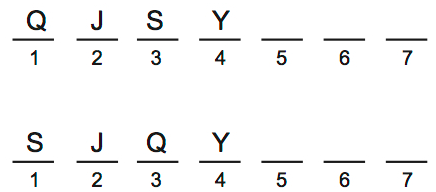
This diagram solves the question. A is CORRECT. J must be second in both scenarios.
In case you were curious, there’s only one order for the remaining variables. G, R and H are left. G has to go before R, and G can’t be beside H, so the order must be GRH in both scenarios.
Question 19
This question tests whether you recognized that putting S first and Q third is an easy way to build a scenario.
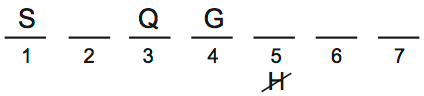
H can’t go fifth, thanks to rule 1.
J has to go second, thanks to rule 4.
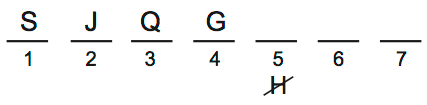
We have H, Y and R left to place. Any combination is fine, as long as you don’t put H in fifth.
This is a Could Be True question, so you should see if this scenario answers the question.
It does! Y can go sixth, so E is CORRECT.
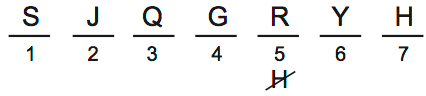
Normally I recommend disproving all the other answers. However, since this is a very hard, time consuming game, I would just move on at this point and hope I hadn’t made a mistake.
That’s if you were doing the game in a timed setting. Since this book is a guide, I’ll show you how to disprove the other answers. No need to read these unless you were stuck on one of the answers.
A is wrong because H can’t go beside G.
For B, here’s my attempt to put J first.
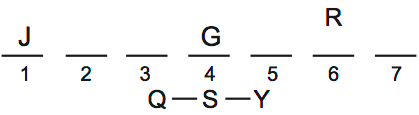
We still have to place Q – S – Y, and H and R.
S can’t go beside Q, so S – Y must go after G.

We still have to place H and Q. H is a problem. H can’t go beside J or G. This diagram doesn’t work.
So J has to be second, and B is wrong.
This also proves C is wrong. Q can’t go second, because J has to be second.
D is wrong. Here’s what happens if you try to put S fifth:

We still have R and H left to place. R has to go in seventh, after G. That leaves only spot 3 for H. This doesn’t work, because H can’t be beside J or G.
Question 20
Open-ended Could Be True questions are tricky. Refresh yourself on the rules, then see what you can eliminate.
In particular, remember that QSR and JGH can’t be beside each other (rule 1).
A is wrong. Rule four says J is before G. If G is second, then the only space to put J before G is in 1. Then J and G would be beside each other, which isn’t allowed.
As for B – there’s no obvious reason why H can’t be in second. There are no rules specific to H. In a timed section, that means you should skip B and try to eliminate other answers.
C is wrong. S can’t go second. Q is the problem. If we put Q before S in space 1, then S and Q would be beside each other which violates rule 1.
If Q is after S, then Q has to be in 3 (rule 2). But then Q would still be beside S.
D is wrong. If R is third, then we need to put J-G-R in 1, 2, and 3. JG can’t be beside each other (rule 1).
E is wrong. If Y is third, we run into problems placing Q and S.
If you put Q before S, then you get QSY in 1, 2 and 3. That doesn’t work because QS can’t be beside each other. (rule 1).
If you put Q after S, then Q would have to be third (rule 2). That doesn’t work, because Y is third for this answer choice.
B is CORRECT. This scenario proves it can work:

Question 21
For a local rule question, you should start by drawing the new rule and making deductions:
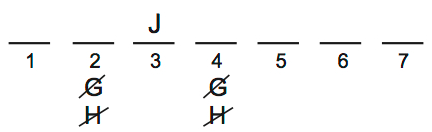
G has to go after J, and R goes after G (rule 4). You need two spots, and there are only three open spaces for GR: 5, 6 and 7.
There are two possibilities:
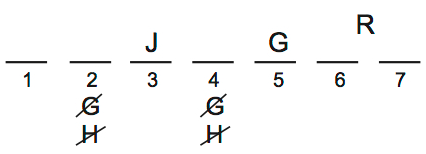
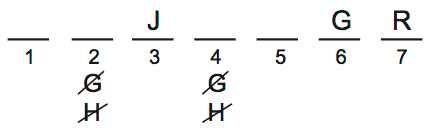
Next, you need to place Q-S-Y. Q is before S, since Q isn’t third (rule 2).
QS can’t both go before J, because they can’t be beside each other. So Q goes before J, and S-Y go after.
Notice that there are four spaces after J, and now they’re filled by S-Y and G-R. Also note that S can’t go beside R.
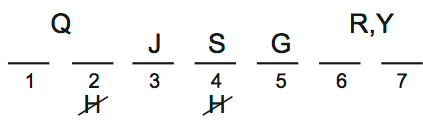
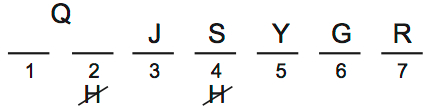
S is forced to go in 4, so that it is not beside R and it is before Y.
Next, we have only Q and H left to place. H can’t go beside J, so H is in 1 and Q is in 2.
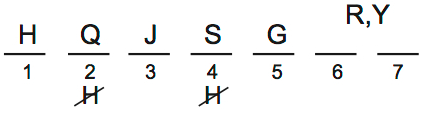
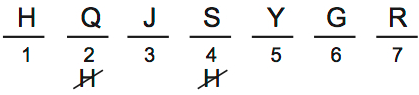
Now you just have to look at the answers and see which one is possible in one of these two diagrams.
E is CORRECT. All the other answers don’t work.
Question 22
For this question it’s easiest to use past scenarios.
Question 17 shows that S can be third. B is wrong.
The scenario from question 18 shows that S can be first. A is wrong.
Question 21 shows that S can be fourth. C is wrong.
We’re left with D and E.
Now you just have to see whether you can put S fifth, or sixth. It turns out that you cannot put S fifth. D is CORRECT.
If you try to put S fifth, it ends up beside R. That’s not allowed, since they’re in the same group:

These diagrams show that S can be sixth. First we’ll put in S-Y. R and Q can’t go fifth, because of the first rule.

Next, add in J-G-R. J and G can’t go beside each other, and R can’t go on four, so this only fits in one place:

Finally, Q can only go second, leaving H to go in sixth. Everything works, so E is wrong.

Question 23
For this question, it can help to look to previous diagrams.
For example, the correct answer on number 17 has H on 4, which is answer choice A.
That diagram has Q and S in 1 and 3. You can easily switch those without affecting anything:

So A is wrong. This also eliminates answer D, since R is seventh in this diagram.
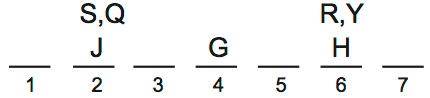
B puts H on 6. This isn’t very limiting. For example, this diagram shows that both S/Q and R/Y are interchangeable when H is on 6. B is wrong.
C puts R on 4. We saw this in question 22. It’s actually quite restrictive, because J-G must be before R and can’t be beside each other.

Next, you have to add in Q-S-Y. Q and S can’t be beside each other, or R, so there’s only one way to place them:

Finally, H goes in spot 5:

C is CORRECT.
This diagram shows that E is wrong. If Y is fifth, then J/H are interchangeable.
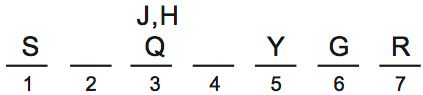
S/Q are interchangeable as well, though I haven’t drawn that.

Leave a Reply